This article contains affiliate links. We earn a small commission if you buy through our links, at no extra cost to you. We only recommend products we'd actually use.
Scottish Fold: Complete Breed Guide for UK Owners
Scottish Fold at a Glance
| Origin | Scotland, 1961 (a farm cat called Susie) |
| Average Weight | 3-6 kg (males typically 4-6 kg, females 3-4.5 kg) |
| Lifespan | 11-15 years |
| Temperament | Sweet, calm, adaptable, quietly affectionate |
| Average Cost (UK) | GBP 1,000-2,000+ (limited UK availability) |
| Good For | Apartments, families, multi-pet households, quiet homes |
| Not Good For | Anyone uncomfortable with ethical concerns around the breed |
| Grooming Level | Low to moderate (depends on coat length) |
| Activity Level | Low to moderate -- calm but not inactive |
| GCCF Recognition | Not recognised. GCCF withdrew recognition in 1974 due to welfare concerns. |
Overview: The Breed You Need to Think Twice About
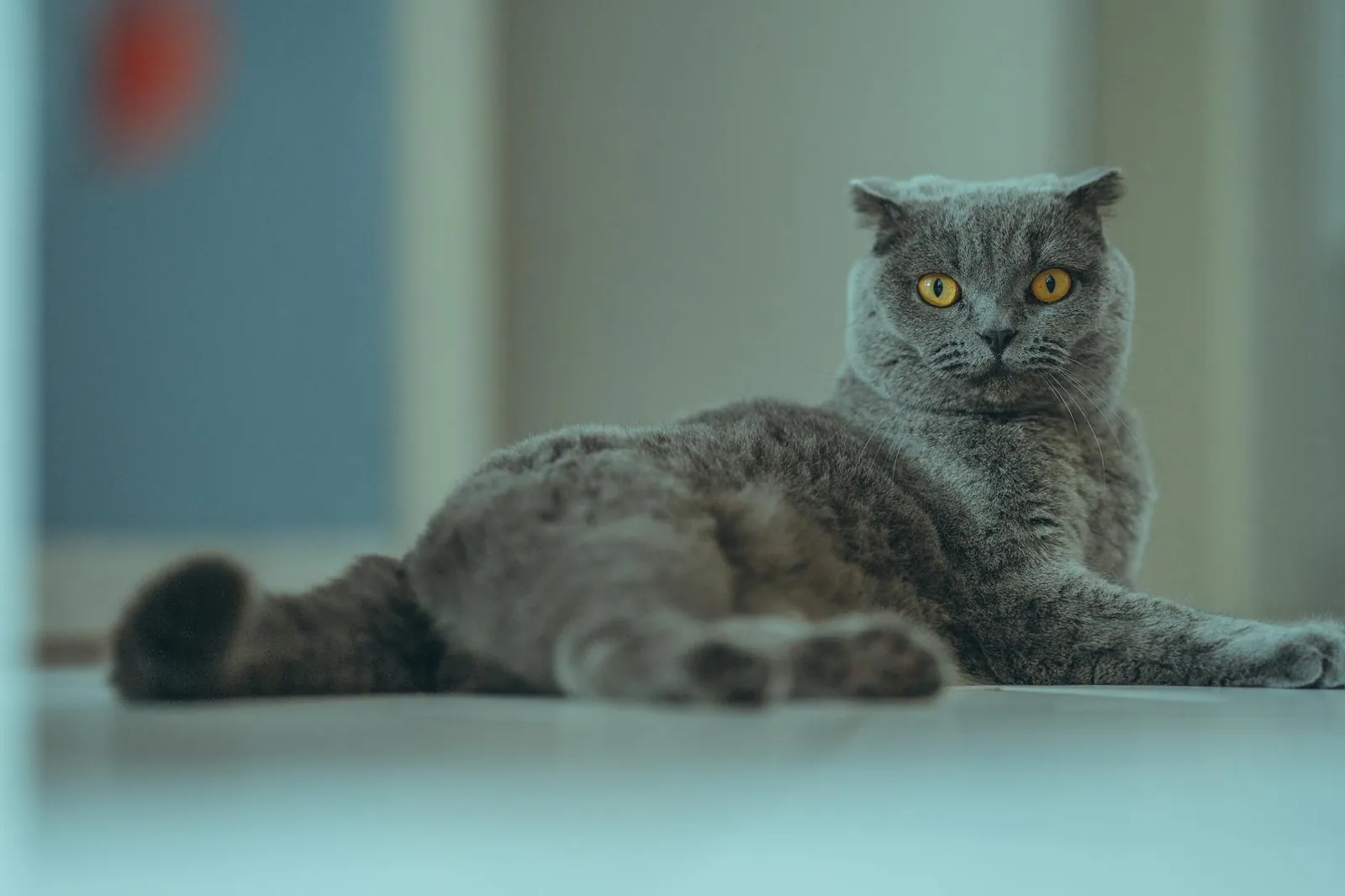
This is not a normal breed guide. We cannot write about Scottish Folds the same way we write about British Shorthairs or Ragdolls, because the Scottish Fold is the most ethically controversial cat breed in the UK. Those adorable folded ears that make them look like owls, the reason most people want one, are caused by a genetic cartilage defect that affects the cat's entire body. Not just the ears. The skeleton, the joints, the tail. Every Scottish Fold carries this defect to some degree.
The GCCF, the UK's primary cat registration body, withdrew recognition of the breed in 1974 because of these welfare concerns. Scotland itself banned breeding them in 2024. Several other countries, including Australia, Austria, Belgium, and Norway, have done the same. The breed's popularity surged anyway, driven by celebrity ownership (Taylor Swift's two Folds became some of the most famous cats on the internet) and social media appeal.
We are not going to tell you not to get a Scottish Fold. That is your decision. But we are going to be completely honest about what the science says, what the welfare implications are, and what you should know before spending GBP 1,500 on a kitten whose defining feature is a genetic condition that causes it pain. You deserve that honesty, and so does the cat.
The Ear Fold: What It Actually Is
The folded ears are not a cosmetic variation like coat colour or eye colour. They are the visible symptom of a condition called osteochondrodysplasia (OCD), a developmental abnormality that affects cartilage and bone formation throughout the body. The same gene that makes the ear cartilage fold also affects cartilage in the joints, spine, and tail.
This is important: all Scottish Folds are affected. Not "some." Not "badly bred ones." All of them. The severity varies, but the underlying condition is present in every cat with folded ears because the fold itself is the condition. A Scottish Fold with perfectly folded ears has defective cartilage by definition.
What does this mean for the cat?
In mild cases, cats may show no obvious symptoms for years, though studies suggest they are likely experiencing subclinical joint discomfort that they simply mask (cats are remarkably good at hiding pain). In moderate to severe cases, cats develop painful arthritis, stiff joints, thickened tails that resist bending, and lameness. Some develop bone growths around the ankles and knees that progressively worsen throughout life.
A 2019 study by the Universities Federation for Animal Welfare (UFAW) concluded that there is no ethical way to breed Scottish Folds, because the fold gene cannot be separated from the skeletal abnormalities. Breeding fold-to-straight (a Fold crossed with a non-fold cat) reduces severity but does not eliminate the condition.
The GCCF does not register Scottish Folds. The breed is banned in Scotland and several other countries. Cats Protection, the RSPCA, the British Veterinary Association, and the UFAW all advise against buying or breeding Scottish Folds due to welfare concerns. This is not fringe opinion -- it is the mainstream veterinary and welfare position in the UK.
Scottish Straights
Not all kittens in a Scottish Fold litter have folded ears. Those with straight ears are called "Scottish Straights" and do not carry the fold gene in a way that causes the same cartilage defects. Scottish Straights are essentially healthy cats with a similar temperament but without the welfare concerns. If you love the Scottish Fold personality but the ethics concern you, a Scottish Straight is the responsible alternative.
Temperament and Personality
Setting aside the health debate for a moment, the temperament is where Scottish Folds genuinely shine. They are one of the sweetest-natured breeds you will encounter.
A Scottish Fold is not demanding. It will not yell at you like a Siamese or redecorate your house like a Bengal. It will sit beside you, follow you gently from room to room, and curl up wherever you happen to be. They are adaptable, calm, and tolerant. They handle change better than most breeds, cope well with children and other pets, and generally approach life with a relaxed, easygoing attitude.
They are also known for sitting in unusual positions. The "Buddha sit" -- sitting upright with legs stretched out in front -- is a Scottish Fold trademark. It looks funny on social media. It is worth knowing that some veterinary behaviourists believe this position may actually be a way of relieving joint discomfort, not just a cute quirk.
The quiet ones
Scottish Folds are notably quiet. Their meow is soft and they do not use it often. If you have lived with a vocal breed and want the opposite, a Fold is about as peaceful as cats get. They communicate more through presence than noise, sitting near you, touching you with a paw, following you to the kitchen at feeding time without making a sound.
They bond well with their family and are rarely aggressive, even when stressed. They tend to retreat rather than lash out, which makes them good with young children who are still learning to handle animals gently.
Scottish Folds are one of the best breeds for flat living. They are quiet, low-energy, and do not need outdoor access. If you live in a small apartment, their calm nature makes them excellent companions -- provided you are comfortable with the ethical considerations covered above.
Health Issues to Know About
The elephant in the room has already been discussed, but osteochondrodysplasia is not the only health concern with this breed.
Osteochondrodysplasia (OCD)
Present in all folded-ear Scottish Folds. Causes cartilage and bone abnormalities throughout the body. Severity ranges from mild (subclinical joint stiffness) to severe (painful arthritis, lameness, fused tail vertebrae). There is no cure. Treatment is pain management only.
Estimated cost: X-rays and diagnosis run GBP 300-600. Ongoing pain management with anti-inflammatories and joint supplements costs GBP 40-80 per month. In severe cases, monthly vet visits for pain management injections cost GBP 80-150 each. Lifetime costs for a moderately affected cat can reach GBP 5,000-15,000.
Ear infections
The folded ears create a warm, enclosed environment that is ideal for bacterial and yeast infections. Regular ear cleaning is essential, not optional. You cannot see inside a folded ear as easily as a normal ear, so problems can develop unnoticed until they are advanced.
Estimated cost: Ear cleaning solution costs around GBP 8-12. Treatment for an ear infection runs GBP 100-250 per episode, including vet consultation and medication.
Polycystic Kidney Disease (PKD)
Scottish Folds have some shared lineage with British Shorthairs (commonly used as outcross partners), and PKD can be present in the breed. DNA testing is available.
Estimated cost: DNA screening GBP 50-100. Treatment for kidney disease, if it develops, costs GBP 100-300 per month in advanced stages.
Cardiomyopathy
HCM has been reported in Scottish Folds, though it is less prevalent than in breeds like British Shorthairs or Ragdolls. Screening is still recommended.
Estimated cost: Echocardiogram screening GBP 200-400. Ongoing medication if diagnosed runs GBP 30-60 per month.
Insurance for Scottish Folds can be significantly more expensive than for other breeds because insurers know about the joint issues. Some policies exclude pre-existing conditions related to osteochondrodysplasia entirely, which means the breed's primary health risk is not covered. Read the policy wording carefully. ManyPets and Petplan both offer lifetime cover, but confirm OCD-related claims are not excluded before signing up.
Insurance
Expect to pay GBP 20-40 per month for lifetime cover. This is notably higher than for most breeds, reflecting the known health risks. Get the insurance in place before any symptoms develop, because once a joint issue is documented, it becomes a pre-existing condition that no insurer will touch.
Best Food for Scottish Folds
Given the breed's joint issues, diet is not just about nutrition -- it is a management tool. The right food can support joint health, manage weight (which reduces stress on compromised joints), and maintain overall condition.
What to look for
- Joint support ingredients -- food with added glucosamine, chondroitin, or omega-3 fatty acids (EPA/DHA) supports cartilage and reduces inflammation
- Weight management -- an overweight Scottish Fold puts significantly more stress on already compromised joints. Controlled calorie content is important
- High protein, low carb -- named meat as the first ingredient, minimal grain fillers
- Anti-inflammatory support -- omega-3 from fish oil has genuine anti-inflammatory benefits for joint conditions
Brands worth considering
Royal Canin Joint Care -- specifically formulated with EPA/DHA and collagen for joint support. Around GBP 20-25 for 2 kg at Pets at Home. One of the few cat foods with meaningful joint health ingredients. [AFFILIATE: Royal Canin]
Lily's Kitchen -- high meat content and grain-free. While it does not specifically target joints, the quality protein supports lean muscle mass, which in turn protects joints. Wet food range around GBP 40-50 per month. [AFFILIATE: Lily's Kitchen]
Purina Pro Plan Sterilised -- good calorie control for weight management. Available widely in UK supermarkets and Pets at Home. Around GBP 15-18 for 1.5 kg. [AFFILIATE: Purina Pro Plan]
On top of food, many Scottish Fold owners add a joint supplement. YuMOVE Cat (around GBP 12-15 for 60 capsules from Pets at Home or Amazon UK) contains glucosamine, chondroitin, and green-lipped mussel extract. Speak to your vet before adding supplements, but most vets are supportive of joint supplementation for this breed. [AFFILIATE: YuMOVE]
Weigh your Scottish Fold monthly. Joint issues worsen faster in overweight cats, and every extra gram matters when the skeleton is already compromised. Your vet can give you a target weight range. Stick to it.
Grooming and Care
Scottish Folds come in both shorthair and longhair varieties. Grooming needs differ accordingly, but there is one grooming task unique to this breed that applies to both.
Ear care -- the critical one
Those folded ears need regular attention. The fold creates a pocket where wax, debris, and moisture accumulate more easily than in a normal upright ear. Check ears weekly and clean with a vet-approved ear cleaner if you see any buildup. Epi-Otic (around GBP 12-15 from your vet or Amazon UK) is widely recommended. [AFFILIATE: Epi-Otic]
Signs of ear infection include head shaking, scratching at the ears, dark discharge, and odour. Because you cannot see into a folded ear as easily, infections can progress further before you notice them. If in doubt, take them to the vet.
Coat care
Shorthair Folds: Weekly brushing with a rubber grooming mitt or soft bristle brush. Minimal shedding. A KONG ZoomGroom (GBP 6-8) handles the short coat well. [AFFILIATE: KONG ZoomGroom]
Longhair Folds (Highland Folds): Two to three brushings per week with a steel comb and slicker brush. Pay particular attention to the armpits, belly, and behind the ears where mats form. Not as demanding as a Persian, but more work than the shorthair variety.
Joint monitoring
This is not traditional "grooming," but it is a care task specific to this breed. Watch for changes in gait, reluctance to jump, stiffness after sleeping, and a tail that does not move or flex normally. Young cats can appear fine and develop problems later. Regular vet checks (every 6-12 months) should include a joint assessment, and X-rays of the limbs and tail are worth requesting periodically.
Dental and nail care
Standard for all breeds. Dental treats or brushing two to three times weekly. Nail trimming every 2-3 weeks for indoor cats. Nothing breed-specific here.
Exercise and Enrichment
Scottish Folds are not high-energy cats, but they still need stimulation. The key difference with this breed is that exercise needs to be adapted around their joint limitations. High-impact activities and excessive jumping should be moderated.
What works well
Ground-level play: Wand toys with ground-trailing attachments work better than toys that encourage leaping. The Da Bird Ground Prey attachment mimics a mouse or insect along the floor. [AFFILIATE: Da Bird]
Puzzle feeders: Mental stimulation without physical strain. The Catit Senses Food Tree (GBP 10-15) or a simple snuffle mat (GBP 8-12) makes them work for their food without stressing joints. [AFFILIATE: Catit Senses Food Tree]
Low cat trees: Avoid tall ceiling-height cat trees that encourage big jumps. A mid-height tree with wide, stable platforms and ramps rather than high perches is more appropriate. Look for platforms at least 35 cm wide to support their weight comfortably. Check prices on Amazon
Window perches: Scottish Folds love watching the world. A sturdy window shelf at sofa height gives them a vantage point without requiring a climb. [AFFILIATE: Window Perch]
Interactive toys: Battery-operated toys that move unpredictably along the ground engage their hunting instincts at low impact. The PetDroid Boltz (around GBP 15-20 from Amazon UK) is a good option. [AFFILIATE: PetDroid Boltz]
If your Scottish Fold stops playing, stops jumping onto furniture it used to access easily, or seems stiff when getting up from a nap, do not assume it is just getting older or lazier. These are signs of joint pain. Get them checked by a vet promptly.
Cost of Owning a Scottish Fold in the UK
Scottish Folds are expensive to buy and potentially very expensive to keep healthy. The limited UK availability drives prices up, and the known health issues mean insurance and veterinary costs run higher than average.
Purchase price
| Source | Typical Cost | Notes |
|---|---|---|
| TICA registered UK breeder | GBP 1,000-2,000 | Limited UK availability. GCCF does not register this breed. |
| Imported from European breeder | GBP 1,500-2,500+ | Including transport, health certificates, and import costs. |
| Unregistered breeder / online ads | GBP 500-1,000 | Higher risk. No health guarantees. Possible kitten farm origin. |
| Scottish Straight (non-fold) | GBP 500-1,200 | Same litters, healthier cats, lower demand means lower price. |
| Rescue / rehoming | GBP 75-150 | Rare but not unheard of. Check general rescues and Cats Protection. |
Annual running costs
| Expense | Annual Cost | Notes |
|---|---|---|
| Food (quality with joint support) | GBP 400-700 | GBP 35-60/month. Factor in joint supplements on top. |
| Joint supplements | GBP 100-180 | GBP 8-15/month. YuMOVE or similar. Most vets recommend this for the breed. |
| Pet insurance (lifetime) | GBP 240-480 | GBP 20-40/month. Higher than average due to known health risks. |
| Annual vet check + vaccinations | GBP 80-150 | Should include joint assessment. X-rays periodically add GBP 150-300. |
| Ear cleaning supplies | GBP 30-50 | Ear cleaner, cotton pads. Budget for vet visits if infections occur. |
| Litter | GBP 120-250 | Standard for any indoor cat. |
| Flea and worm treatment | GBP 60-120 | Monthly spot-on or quarterly tablets. |
| Toys, scratching posts, replacements | GBP 50-100 | Focus on ground-level toys. |
| Pain management (if needed) | GBP 0-960 | GBP 0-80/month depending on severity. Could be significantly more. |
| Total annual cost | GBP 1,080-2,990 | The upper range reflects a cat with active joint issues. |
First-year setup costs
Budget GBP 250-500 for initial supplies: litter tray, food bowls, carrier, cat tree (mid-height), scratching posts, toys, ear cleaning kit, and a comfortable orthopaedic bed. A memory foam cat bed (GBP 20-40) is a worthwhile investment for a breed with joint concerns.
The total lifetime cost of a Scottish Fold can be significantly higher than for most breeds. A cat that develops moderate osteochondrodysplasia in middle age can easily cost GBP 10,000-20,000 in pain management, diagnostics, and ongoing veterinary care over its lifetime. Factor this into your decision.
Is a Scottish Fold Right for You?
Yes, if...
- You have thoroughly researched the ethical and health implications and made a considered decision
- You can afford higher-than-average insurance and veterinary costs, including potential lifelong pain management
- You want a calm, quiet, sweet-natured companion that adapts well to flat living
- You are committed to regular ear cleaning and joint monitoring
- You have a vet experienced with the breed's specific health needs
- You would genuinely consider a Scottish Straight as an alternative -- same personality, no cartilage defect
No, if...
- You are buying one primarily because the ears look cute on social media
- You have not researched osteochondrodysplasia and what it means for the cat's quality of life
- You are on a tight budget -- this is not the breed for cost-conscious ownership
- You are uncomfortable with the fact that the GCCF, BVA, Cats Protection, and RSPCA all advise against the breed
- You want an active, playful cat that jumps and climbs (the joints may not allow it)
- You expect to find a reputable breeder easily in the UK -- they are few and far between
- You want a breed with long-term health certainty
Where to Get a Scottish Fold in the UK
The limited options
Because the GCCF does not recognise Scottish Folds, finding a registered breeder in the UK is significantly harder than for other breeds. Your options are:
TICA registered breeders: TICA (The International Cat Association) does register Scottish Folds, and a small number of TICA-registered breeders operate in the UK. Use their breeder directory and filter by location.
European breeders: Some UK buyers import Scottish Folds from breeders in countries where the breed is still widely bred (parts of Europe, the US). This adds significant cost and complexity, including pet passports, health certificates, and transport arrangements.
What to demand from any breeder
- Health screening results for both parents, including joint X-rays
- Evidence of fold-to-straight breeding (fold-to-fold crosses produce more severe health issues and are universally condemned)
- A written contract with a health guarantee that specifically covers osteochondrodysplasia
- Registration with TICA or another recognised international body
- Willingness to take the cat back at any point in its life
Be extremely cautious of Scottish Fold kittens advertised on classified sites like Gumtree, Pets4Homes, and Facebook Marketplace. The breed's high price and limited legitimate supply makes it a target for kitten farms and backyard breeders. A fold-to-fold mating (which should never happen) produces kittens with severe skeletal deformities. If you cannot verify the breeding pair's genetics, walk away.
The alternative: Scottish Straights and other breeds
If you love the Scottish Fold personality but the health concerns give you pause (and they should), consider:
- Scottish Straight -- same breed, same temperament, straight ears, no cartilage defect
- British Shorthair -- similar calm, adaptable personality with a robust health profile
- Ragdoll -- similarly sweet and docile, widely available from GCCF breeders, fewer ethical concerns