This article contains affiliate links. We earn a small commission if you buy through our links, at no extra cost to you. We only recommend products we'd actually use.
Bengal Cat: Complete Breed Guide for UK Owners
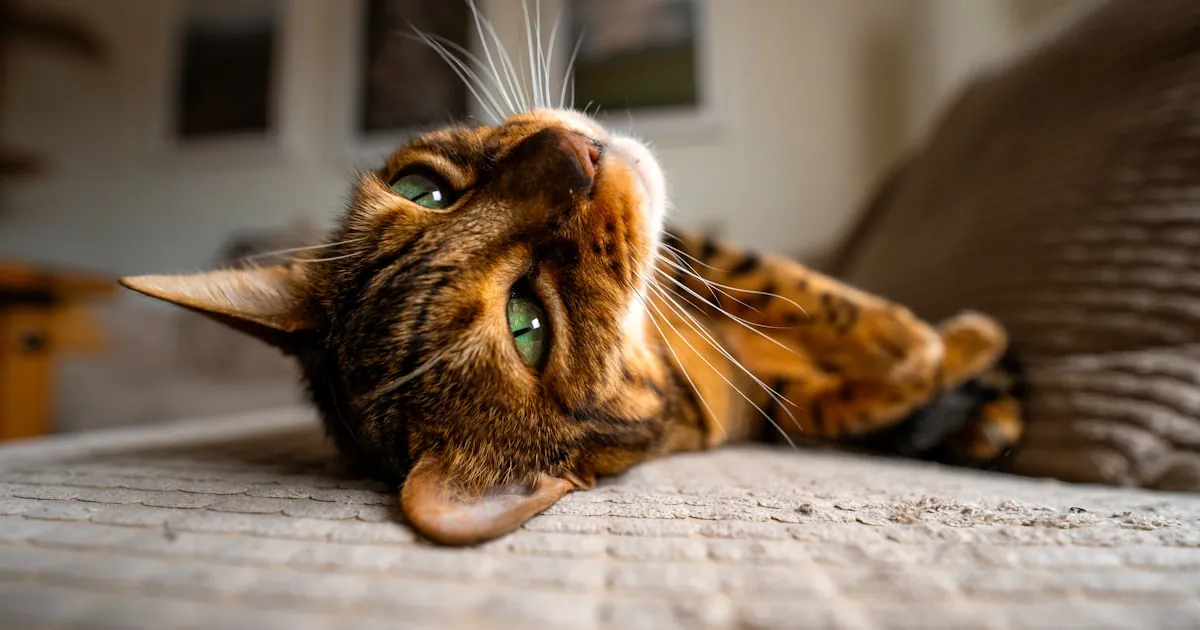
The Bengal is the supermodel of the cat world. Jaw-dropping rosette coat, muscular build, the kind of cat that stops people mid-scroll on Instagram. And that is precisely the problem. Thousands of people buy Bengals because they look spectacular, then discover they have essentially adopted a small, furious leopard with the energy of a border collie and the problem-solving ability of a toddler who has learned to open the fridge.
Bengals are genuinely brilliant cats. But they are not for everyone, and pretending otherwise does the breed a disservice. UK Bengal rescues are full of cats surrendered by owners who expected a pretty house cat and got a wrecking ball in a designer coat. This guide will tell you exactly what you are signing up for.
Bengal Cat: Quick Stats
| Origin | United States (Asian Leopard Cat x domestic hybrid, 1960s-1980s) |
| Average Weight | 3.5-7 kg (males typically larger) |
| Lifespan | 12-16 years |
| Temperament | Extremely active, vocal, intelligent, loyal, demanding |
| Average Cost UK | £800 - £1,500+ (show quality/rare colours higher) |
| Good For | Experienced owners, active households, people who work from home |
| Not Good For | First-time owners, long working hours, small flats, quiet households |
| Grooming Level | Low (short coat, minimal shedding) |
| Activity Level | VERY HIGH |
| UK Recognition | GCCF, TICA |
The Honest Truth About Bengals
Let's get this out of the way early: Bengals are not a starter cat. They are not even a second cat for most people. They are a commitment that sits somewhere between "enthusiastic hobby" and "lifestyle change."
The Instagram version of Bengal ownership looks like this: a gorgeous spotted cat draped elegantly across a velvet sofa, posing beside a latte. The reality looks more like this: a gorgeous spotted cat has opened every cupboard in the kitchen, knocked every item off every shelf, yelled at you for the past forty minutes because dinner was three minutes late, and is now trying to work out how to turn on the bath taps. Again.
They are descended from the Asian Leopard Cat, a small wild cat native to South and East Asia. That wild heritage is not just marketing. Even at four or five generations removed from the original hybrid crosses, Bengals retain a level of energy, intelligence, and sheer bloody-mindedness that puts most domestic breeds to shame.
All of that said, if you match their energy and understand what you are getting into, a Bengal can be one of the most rewarding breeds to live with. They form intense bonds with their owners, they can be trained to walk on harnesses, play fetch, and learn tricks. They are endlessly entertaining. You will never be bored with a Bengal. You may, however, be exhausted.
Temperament and Personality
The Good
Bengals are fiercely intelligent. They learn routines, recognise words, and figure out cause and effect faster than you might want them to. Many owners describe them as "dog-like" in their loyalty, and that comparison is fair. A Bengal will follow you from room to room, greet you at the door, and actively seek your company. They want to be involved in whatever you are doing, whether that is cooking, working, or going to the toilet. Especially going to the toilet.
They are trainable in ways that would surprise people used to standard domestic cats. Bengals can learn to walk on a harness, come when called, sit, and play fetch. Some will ride on your shoulders. Many enjoy car journeys. If you want an interactive cat that actually wants to engage with you, the Bengal delivers.
They are also spectacularly athletic. Watching a Bengal move is like watching a nature documentary in your living room. They can jump extraordinary heights, sprint at speed, and their coordination is remarkable.
The Other Side
Here is where the honesty comes in.
They are loud. Bengals do not meow. They yell. They chirp, they trill, they make sounds you did not know a cat could make, and they do it at volume. If you live in a flat with thin walls, your neighbours will hear your Bengal. At 3am. Loudly.
They are destructive when bored. A Bengal without enough stimulation will redecorate your home for you. Wallpaper gets stripped. Furniture gets shredded. Curtains get climbed. This is not bad behaviour, it is a highly intelligent animal telling you it needs more to do. The destruction is your fault, not theirs.
They open things. Cupboards, drawers, doors, and in some cases taps. Bengal-proofing your home is a real thing. Child locks on kitchen cupboards are standard for Bengal owners. If you leave anything interesting in an accessible location, a Bengal will find it, open the container, and investigate the contents. Usually across your floor.
They need company. Bengals do not do well alone for long periods. If you work full-time out of the house, a Bengal will suffer. They can develop anxiety, become destructive, and start engaging in attention-seeking behaviour that escalates over time. Many Bengal owners get a second cat specifically to keep their Bengal company, though that second cat should ideally be another high-energy breed. A Maine Coon can be a good companion choice - they are sociable, playful, and robust enough to handle a Bengal's energy.
Bengals are one of the most commonly surrendered pedigree breeds in the UK. Bengal Cat Welfare and other rescue organisations are consistently full. The number one reason for surrender: "more than we expected." Do your research before committing.
Health Issues
Bengals are generally robust cats, but they have several breed-specific conditions you need to know about, and more importantly, budget for.
Hypertrophic Cardiomyopathy (HCM)
The big one. HCM causes thickening of the heart walls and is the most common heart disease in cats, but Bengals are particularly predisposed. Responsible breeders screen breeding cats annually with echocardiograms. Ask to see the results, and walk away from any breeder who has not screened. HCM screening costs the breeder around £200-£300 per cat. Ongoing management if your cat develops HCM can run £100-£200 per month in medication.
Progressive Retinal Atrophy (PRA-b)
A genetic condition causing progressive blindness. The good news: there is a DNA test for the Bengal-specific variant (PRA-b), and reputable breeders test for it. Both parents should be tested clear. Ask for certificates. A kitten from two tested parents will not develop PRA-b. There is no excuse for a breeder not to test.
Pyruvate Kinase Deficiency (PK Deficiency)
An inherited condition affecting red blood cells, leading to anaemia. Again, a DNA test exists. Again, any decent breeder will test. The pattern here should be obvious: buy from breeders who test, or accept the risk.
Flat-Chested Kitten Syndrome (FCKS)
More common in Bengals than other breeds. Affects the chest shape in very young kittens. Mild cases often self-correct, severe cases can be fatal. This is the breeder's problem to manage, but you should be aware of it and ask whether the breeder has experienced it in their lines.
Sensitive Stomachs
Bengals are notorious for digestive sensitivity. Many cannot tolerate grain-heavy commercial food, and some develop irritable bowel issues. This is not a rare quirk, it is common enough that most Bengal owners factor premium food into their ongoing costs from day one.
Before buying a Bengal kitten, ask the breeder for: HCM echocardiogram results (both parents), PRA-b DNA test certificates (both parents), PK deficiency test results (both parents), and a written health guarantee. Any breeder who gets defensive about these questions is a breeder you should avoid.
Best Food for Bengals
Bengals need high-protein food. This is not marketing nonsense, it is biology. They are descendants of a wild cat species, and their digestive systems do better with meat-heavy, grain-free diets. Feeding a Bengal supermarket cat food is like putting cooking oil in a performance car. It will run, but not well, and not for long.
Look for foods with named meat as the first ingredient (not "meat and animal derivatives," which is code for mystery sludge). Protein content should be 40% or above. Grain-free is generally better for Bengals given their stomach sensitivity, though some tolerate rice-based options.
Recommended UK Brands
Wet food:
- [AFFILIATE: Applaws] - high meat content, grain-free, widely available in UK. The 156g tins are good value. A solid mid-range option.
- [AFFILIATE: Lily's Kitchen] - UK brand, organic options, named meat sources. More expensive but quality is consistent.
- [AFFILIATE: Encore] - 100% natural meat, no fillers. Excellent for Bengals but pricey if used exclusively.
- [AFFILIATE: Canagan] - British brand, 65%+ meat content, grain-free. Strong option for sensitive stomachs.
Dry food:
- [AFFILIATE: Orijen Cat & Kitten] - 85% animal ingredients, biologically appropriate. The gold standard but at a gold-standard price.
- [AFFILIATE: Canagan Free-Run Chicken] - 60% chicken, grain-free, UK-made. Good value for the quality.
- [AFFILIATE: Symply] - UK-made, single-protein options useful for elimination diets if your Bengal has food sensitivities.
Raw feeding:
Many Bengal owners swear by raw feeding, and there is evidence it suits their digestive systems well. If you go this route, use a commercially prepared raw diet rather than DIY unless you genuinely understand feline nutritional requirements. [AFFILIATE: Nutriment] and [AFFILIATE: Natural Instinct] are good UK options with complete and balanced formulas.
Budget £40-£70 per month for feeding a Bengal properly. Yes, that is more than a standard domestic cat. Their digestive sensitivity means cheap food often leads to vet visits that cost far more than the food savings.
Grooming and Care
Here is the one area where Bengals are genuinely low-maintenance. Their short, dense coat has an almost pelt-like quality and requires minimal grooming. A weekly brush to remove loose hair is plenty. They shed less than most breeds, making them a better (though not hypoallergenic) option for people with mild cat allergies.
Their coat has a distinctive "glitter" effect, where individual hairs have a translucent tip that catches light. This is not something you need to maintain, it is just a feature of the breed. It looks fantastic in sunlight.
Water and Bengals
Unlike most cats, many Bengals actively enjoy water. Do not be surprised if your Bengal joins you in the shower, drinks from running taps rather than a bowl, or dunks toys in their water dish. Some will paddle in a shallow tray if you provide one. This is normal Bengal behaviour, not a concern. Just keep the toilet lid down unless you want a wet Bengal sitting on your pillow at midnight.
A cat water fountain is practically essential for a Bengal. They prefer running water, and a fountain encourages better hydration. [AFFILIATE: PetSafe Drinkwell] or [AFFILIATE: Catit Flower Fountain] are reliable options available across UK retailers.
Dental Care
Like all cats, Bengals benefit from regular dental care. Dental disease is the most common health issue across all cat breeds, and prevention is far cheaper than treatment. Dental cleaning at a UK vet typically costs £200-£400 under anaesthetic. Regular brushing (yes, you can train a Bengal to tolerate a toothbrush, they are trainable enough) or dental treats can reduce the frequency of professional cleanings.
Exercise and Enrichment
This is the section that matters most. If you read nothing else in this guide, read this. The number one reason Bengals end up in rescue is under-stimulation. A bored Bengal is a destructive Bengal, and a destructive Bengal often becomes a surrendered Bengal.
Bengals need serious daily exercise and mental stimulation. We are talking at least 30-60 minutes of active play per day, plus an enriched environment that gives them things to do when you are not directly engaging with them. This is not optional.
Essential Enrichment
Cat wheel: If you can only buy one thing for a Bengal, make it a cat wheel. These are essentially hamster wheels scaled up for cats, and Bengals take to them naturally. They can run at full speed indoors without destroying your furniture. [AFFILIATE: One Fast Cat] ships to the UK, or search for UK-based cat wheel sellers on Etsy. Expect to pay £150-£400. Worth every penny.
Tall cat trees: Standard 1-metre cat trees are not enough. Bengals need height. Look for floor-to-ceiling trees or wall-mounted climbing systems. RHR Quality Cat Trees are a decent UK option with heavy-duty construction that can handle Bengal-level abuse. Budget £100-£300 for something that will last.
Puzzle feeders: Do not just dump food in a bowl. Make your Bengal work for it. Puzzle feeders slow down eating (Bengals are often fast eaters) and provide mental stimulation. [AFFILIATE: Catit Senses Food Tree] and [AFFILIATE: Trixie Activity Fun Board] are good starters. £10-£25 each.
Interactive toys: Wand toys, laser pointers (never shine in eyes), motorised chase toys. Rotate them regularly because Bengals get bored of the same toy quickly. [AFFILIATE: PetSafe Bolt Laser Toy] is a good automatic option for when you need a break. Budget £30-£50 per year on new toys.
Harness Training
Bengals are one of the best breeds for harness training. Many genuinely enjoy walks outdoors, and it gives them stimulation that indoor enrichment cannot fully replicate. Start young, use a properly fitted escape-proof harness (not a collar, never a collar), and build up gradually from indoor wearing to garden walks to full outdoor exploration.
[AFFILIATE: Supakit] makes excellent cat harnesses designed and sold in the UK, specifically for active breeds. They are escape-proof and well-padded. Expect to pay around £30-£40.
Letting a Bengal free-roam outdoors is risky. They are expensive, eye-catching cats and theft is a real problem. They are also bold, athletic, and have a strong prey drive, meaning they range further than most domestic cats. If outdoor access is important, consider a secure catio or supervised harness walks rather than unsupervised free roaming.
Catios
If you have a garden, a catio (enclosed outdoor cat run) is an excellent investment for a Bengal. It gives them outdoor access, fresh air, and stimulation without the risks of free roaming. UK companies like [AFFILIATE: ProtectaPet] and [AFFILIATE: Kittywalk] offer modular systems from around £300 for a basic setup to £1,500+ for elaborate garden enclosures.
Cost of Owning a Bengal in the UK
Bengals are not cheap to buy and not cheap to keep. Here is an honest breakdown in real numbers.
One-Off Costs
| Item | Cost (GBP) | Notes |
|---|---|---|
| Kitten purchase (pet quality) | £800 - £1,500 | From a TICA/GCCF registered breeder |
| Kitten purchase (show/breeding) | £1,500 - £3,000+ | Rare colours (silver, charcoal) at the top end |
| Initial vaccinations | £60 - £80 | Usually included by breeder for first jab |
| Neutering/spaying | £50 - £100 | Some breeders sell already neutered |
| Microchipping | £20 - £30 | Legal requirement in the UK from June 2024 |
| Starter kit (litter tray, bowls, carrier, bed) | £80 - £150 | Buy quality. Bengals destroy cheap items |
| Cat tree (tall, sturdy) | £100 - £300 | Essential, not optional |
| Cat wheel | £150 - £400 | Strongly recommended for Bengals |
| Total one-off | £1,260 - £2,560+ |
Ongoing Annual Costs
| Item | Annual Cost (GBP) | Notes |
|---|---|---|
| Premium food | £480 - £840 | £40-70/month. Cheap food = vet bills |
| Pet insurance | £180 - £420 | Higher than average due to breed-specific risks (HCM, PRA) |
| Annual vaccinations and health check | £70 - £100 | Non-negotiable |
| Flea/worm treatment | £60 - £100 | Monthly preventative |
| Cat litter | £100 - £200 | Clumping/crystal preferred. They are fussy |
| Toys and enrichment | £50 - £100 | Replacements needed. They destroy things |
| Dental care | £0 - £400 | Professional cleaning every 1-3 years |
| Total annual | £940 - £2,160 |
Over a 14-year lifespan, you are looking at roughly £14,000 - £32,000 in total costs. That is before any emergency vet visits, which for conditions like HCM can run into thousands. This is not a cheap hobby.
Pet insurance is not optional for Bengals. Get lifetime cover, not time-limited or per-condition capped policies. Bengal-specific conditions like HCM are chronic and expensive to manage. Lifetime policies from the likes of Petplan, Bought By Many (now ManyPets), or Agria typically cost £15-£35 per month for a Bengal.
Is a Bengal Right for You?
Be honest with yourself here. Wanting a Bengal and being right for a Bengal are two very different things.
A Bengal might be right for you if:
- You work from home or have someone at home most of the day
- You have experience with cats and understand feline behaviour
- You have a house (or large flat) with space for climbing furniture and a cat wheel
- You actively want an interactive, demanding cat that needs daily engagement
- You can afford premium food, proper insurance, and ongoing enrichment costs
- You find their vocal nature entertaining rather than annoying
- You are prepared to Bengal-proof your home (child locks, securing breakables)
- You have the patience for a cat that is smarter than you sometimes wish it were
A Bengal is probably NOT right for you if:
- You work full-time outside the home and the house is empty all day
- You live in a small flat with neighbours who would hear noise
- You want a calm, quiet, low-maintenance cat (a British Shorthair or Ragdoll would suit you far better)
- This would be your first cat
- You are buying purely because of how they look
- You have expensive furniture you want to stay intact
- Your budget is tight and you are hoping to cut costs on food or insurance
- You want a cat that is happy to sit on the sofa and be decorative (that is literally what a British Shorthair was born to do)
If you are reading this list and mentally arguing with the "not right for you" points, thinking "mine will be different" or "I can make it work," please visit a Bengal rescue and speak to the volunteers. Ask them what the most common reason for surrender is. Then decide.
Where to Get a Bengal in the UK
Registered Breeders
Always buy from a breeder registered with GCCF (Governing Council of the Cat Fancy) or TICA (The International Cat Association). Registration does not guarantee a good breeder, but it is the minimum bar. A registered breeder should:
- Show you health test results for both parents (HCM, PRA-b, PK deficiency)
- Let you visit and meet the kittens and at least the mother
- Not release kittens before 13 weeks of age
- Provide a written contract with a health guarantee
- Ask you questions about your home and experience (good breeders are picky about buyers)
- Be happy to stay in contact after sale and take the cat back if you cannot keep it
Use the GCCF Breeder Directory or TICA Breeder Listings as starting points. The Bengal Cat Club and Bengal Cat Association UK also maintain breeder lists.
Red Flags
Walk away from any breeder who:
- Will not show health test certificates
- Offers to deliver the kitten without you visiting
- Has kittens available immediately with no waiting list (good breeders usually have waiting lists)
- Prices significantly below £800 (either health testing is being skipped or something else is wrong)
- Breeds multiple different breeds simultaneously
- Advertises on Gumtree, Pets4Homes, or Facebook Marketplace without verifiable registration
Bengal Rescue
Consider rescue. Seriously. There are breed-specific Bengal rescues in the UK, and they are never short of cats needing homes. Rescue Bengals are typically 1-5 years old, already neutered and vaccinated, and the rescue staff can tell you exactly what their personality is like because they have been assessed in foster care.
UK Bengal rescues:
- Bengal Cat Welfare - the main UK Bengal rescue, covering England and Wales
- Bengal Rescue Network UK - volunteer network rehoming surrendered Bengals
- Cats Protection - the UK's largest cat charity often has Bengals and Bengal crosses
Adoption fees are typically £100-£200, a fraction of breeder prices, and you are giving a home to a cat that genuinely needs one. Many rescue Bengals were surrendered simply because their previous owners were not prepared for the breed. They are not broken cats. They just need the right home.