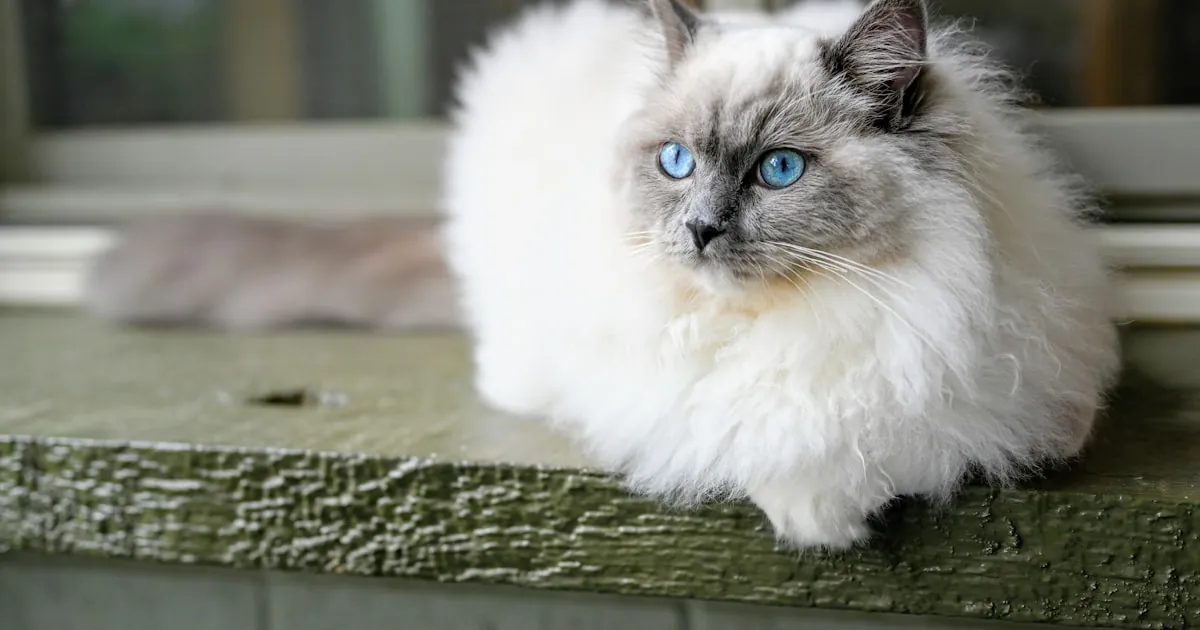
Ragdoll Cat: Breed Guide for UK Owners
The Ragdoll is a large, calm, blue-eyed semi-longhair that likes company, suits indoor life and gets on with children and other pets. Its main health risk is an inherited heart disease, HCM, so buy only from a breeder who DNA tests both parents.
Prices and figures checked September 2026.
| Origin | California, 1960s |
| Adult weight | Males 6 to 9kg, females 4 to 6kg |
| Life expectancy | About 10 years at birth in UK vet records; many live well into their teens |
| Temperament | Relaxed, sociable, follows people around |
| Grooming | Brush two or three times a week |
| Kitten price | £1,300 to £2,000 from a registered breeder (price guide) |
| Registered by | GCCF, TICA, FIFe |
Why do Ragdolls go limp when you pick them up?
Many Ragdolls relax completely and hang loose when held, a trait the breed's founder, Californian breeder Ann Baker, selected for in the 1960s and which gave the breed its name.
Not every Ragdoll does it, and some only flop for people they know. It is a sign of a relaxed cat, not a lack of muscle tone, so support the back legs as you would with any cat.
Are Ragdoll cats friendly?
Yes, Ragdolls are one of the most sociable breeds: they greet people, follow them from room to room and usually accept children, dogs and other cats.
They are more likely to be on the sofa than on top of the wardrobe, and they play in short bursts rather than all day. They do not like being alone, though. A Ragdoll left by itself for long working days can become bored and unsettled, so a second cat helps if the house is empty most of the day. They tend to walk away from conflict, which makes them easy for a bossy resident cat to bully.
How big do Ragdoll cats get?
An adult male Ragdoll usually weighs 6 to 9kg and a female 4 to 6kg, and both keep growing until they are three or four years old.
That makes a large male heavier than most cats, with the kit to match: an XL carrier, a big litter tray and a cat tree with a wide base. Male vs female Ragdoll has sizes by age.
Are Ragdoll cats indoor cats?
Most UK breeders ask for Ragdolls to be kept indoors or given a secure garden or catio, and many write it into the sale contract.
The usual reasons are theft risk for an expensive breed and a trusting nature that does not help with traffic or dogs. An indoor Ragdoll still needs things to do: daily play with a wand toy, a window to watch from, a sturdy scratching post tall enough for a big cat to stretch, and measured meals so it does not put on weight. The indoor vs outdoor cats guide covers both options.
Do Ragdoll cats have health issues?
The main one is hypertrophic cardiomyopathy (HCM), a thickening of the heart muscle that is common in Ragdolls and can cause heart failure or sudden death.
The government's Animal Welfare Committee lists the Ragdoll among the breeds in which HCM is very common, in its 2024 opinion on cat breeding. Cats with two copies of the mutation are at high risk of severe disease, often at one to two years old. A DNA test finds the Ragdoll-specific MYBPC3 mutation, and both parents should be tested. A clear test lowers the risk but does not remove it, because HCM also has other causes, so some breeders also have their cats' hearts scanned.
Many breeders also DNA test for polycystic kidney disease (PKD). Like other large, laid-back indoor cats, Ragdolls put on weight easily, so feed measured portions. Get lifetime pet insurance while the cat is young, before anything becomes a pre-existing condition (is cat insurance worth it?).
How long do Ragdoll cats live?
A Ragdoll born in the UK has a life expectancy of about 10 years, and the median age at death was just over 12 years, in a 2024 Royal Veterinary College study.
The VetCompass study included cats that died young, which pulls the average down, and it recorded Ragdolls living past 20. Health-tested parents give a kitten the best start.
Do Ragdoll cats shed a lot?
Yes, Ragdolls shed steadily and more in spring and autumn, though their silky coat has less undercoat than a Persian's and mats less easily.
Brush two or three times a week with a steel comb and a slicker brush, daily during a heavy moult. Mats form first behind the ears, in the armpits and on the belly. Most Ragdolls never need a bath. Trim the claws every few weeks, since indoor cats do not wear them down. See the cat brush guide for tools that suit a semi-long coat.
Why do Ragdoll kittens change colour?
Ragdoll kittens are born almost white and their colour develops over the first two to three years, because the pointed pattern comes from a temperature-sensitive pigment gene.
The same gene colours the points of a Siamese: cooler parts of the body, such as the ears, face, legs and tail, darken first. Ragdolls come in seal, blue, chocolate, lilac, red and cream, in colourpoint, mitted and bicolour patterns, so the kitten you collect at 13 weeks will look quite different at three years old.
What a Ragdoll costs
A pet Ragdoll kitten from a registered UK breeder costs about £1,300 to £2,000. Adverts for much less are usually for unregistered kittens with no health testing. The Ragdoll price guide breaks prices down by source and colour and covers first-year costs.
Ragdolls are among the five breeds most often registered with the GCCF, and that demand draws in sellers without papers. Visit the kitten with its mother, ask for the parents' HCM DNA results before paying, and expect a good breeder to keep kittens until 12 to 13 weeks. Adult Ragdolls also come up through breed rehoming schemes and general rescues; see adopting a rescue cat.