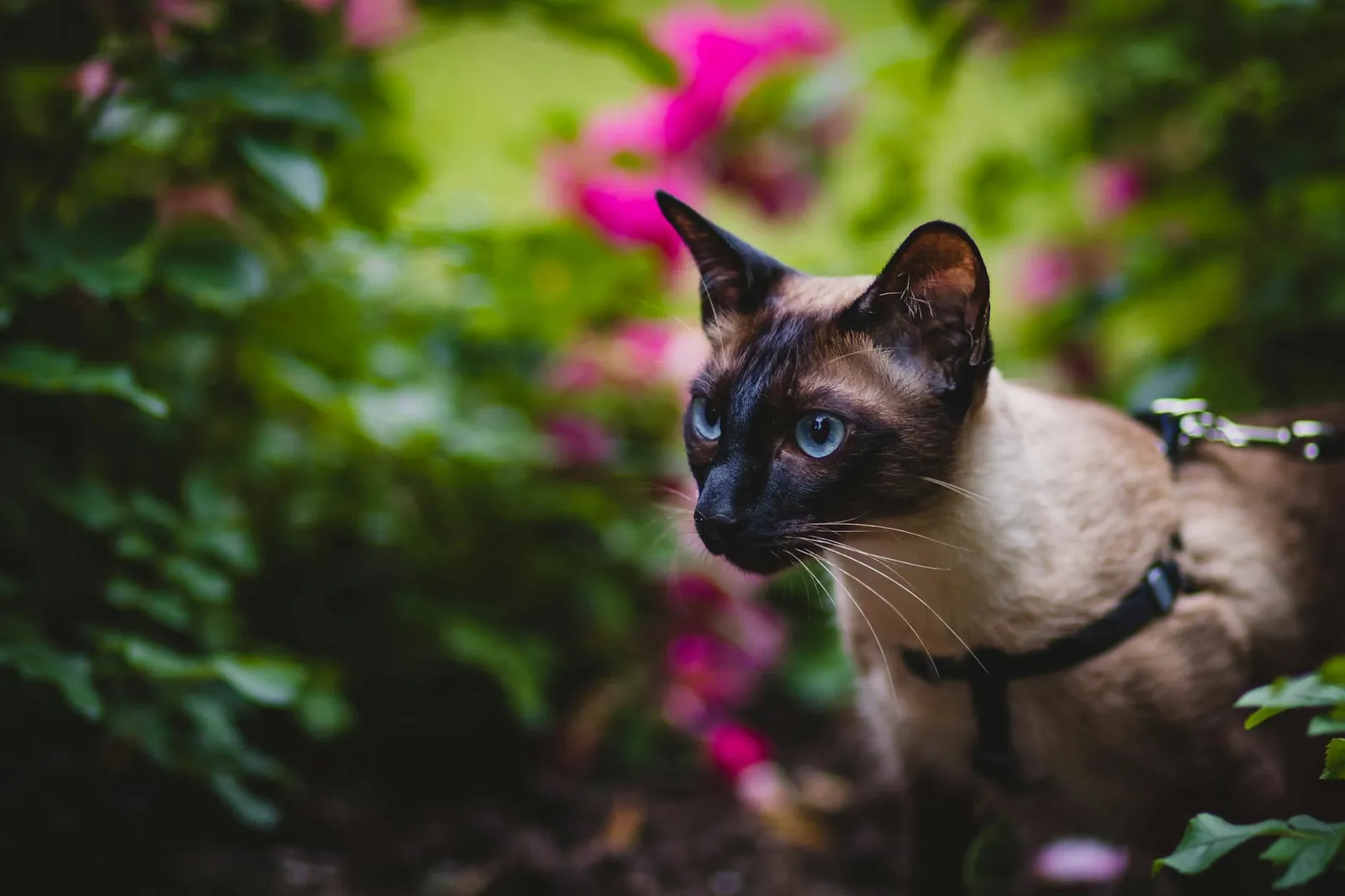
Siamese cat with vivid blue eyes and dark seal point markings sitting upright

This article contains affiliate links. We earn a small commission if you buy through our links, at no extra cost to you. We only recommend products we'd actually use.

Siamese Cat: Complete Breed Guide for UK Owners

Siamese at a Glance

OriginThailand (formerly Siam)
Average Weight3-5 kg (males typically 4-5 kg, females 3-4 kg)
Lifespan12-20 years (often reaching the high end)
TemperamentVocal, intensely social, intelligent, demanding, dog-like loyalty
Average Cost (UK)GBP 400-800 (GCCF registered breeder)
Good ForPeople who work from home, households with other cats, experienced owners
Not Good ForPeople who want a quiet cat, long working hours away from home, noise-sensitive neighbours
Grooming LevelLow (short, fine coat)
Activity LevelHigh -- these cats do not sit still
Recognised ByGCCF, TICA, FIFe

Overview

The Siamese is not a cat for people who want a cat. It is a cat for people who want a small, opinionated roommate who will narrate every moment of your shared existence in a voice that carries through walls. They are stunning to look at, fiercely intelligent, and capable of a depth of bonding that genuinely surprises people who have only lived with less social breeds. They are also, without exaggeration, the loudest domestic cat breed on the planet.

That is not a quirky personality trait you can manage with a few extra play sessions. A Siamese in full voice sounds like a toddler wailing. They will tell you when they are hungry, when they are bored, when they disagree with a decision you have made, and when they simply have thoughts to share at 4am. If you live in a terraced house or a flat with thin walls, your neighbours will know you have a Siamese. They will know within 24 hours.

All of that said, there is a reason this breed has been popular for over a century. Siamese cats form bonds with their humans that other breeds simply do not match. They will greet you at the door, follow you room to room, and insert themselves into everything you do. Living with a Siamese is exhausting, entertaining, and genuinely unlike living with any other cat. But you need to know exactly what you are signing up for, because the gap between the Instagram version and the reality is where most of the surrendered Siamese in UK rescues come from.

Two types: Traditional vs Modern

There are two distinct types of Siamese, and they look like different breeds entirely. The traditional Siamese (sometimes called "apple head" or "Thai") has a rounder face, a sturdier build, and looks closer to what the breed looked like when it first arrived in Britain in the 1880s. The modern Siamese (sometimes called "wedge head") is what you see in most show rings today -- extremely angular face, large bat-like ears, long tubular body, and a much more extreme silhouette.

The modern type is more prone to respiratory issues because of that extreme wedge-shaped skull. If you are choosing between the two purely on health grounds, the traditional Siamese is the better bet. Both types share the same temperament, the same vocal tendencies, and those extraordinary vivid blue eyes.

Temperament and Personality

Siamese cats are described as "dog-like" more than any other breed, and it is the most accurate comparison available. They will come when called. They can learn tricks. They play fetch without being trained to. Some will walk on a harness. They want to be involved in absolutely everything you do, and they will vocalise their displeasure loudly if they feel excluded.

The bonding is intense. A Siamese will typically choose one person in the household as their primary human and form an attachment that borders on obsessive. They will sleep on that person, follow that person, and ignore everyone else with varying degrees of disdain. If you live alone, this is wonderful. If you bought a "family cat" and your Siamese has decided that only your partner exists, prepare for some hurt feelings.

The volume problem

We need to talk about the noise, because it is the single biggest reason people rehome Siamese cats and the thing most breed profiles massively understate.

A Siamese does not meow. It yowls. The sound is low, raspy, and carries. Think of a baby crying, but with the persistence of a car alarm and the timing of a cat who has decided that 3:47am is the ideal moment to discuss breakfast. They vocalise when they are happy, hungry, bored, lonely, annoyed, or simply because the silence offended them. Some Siamese barely stop talking during waking hours.

This is not fixable. You cannot train a Siamese to be quiet. You can reduce the volume slightly by ensuring they are well-stimulated and not anxious, but a quiet Siamese is usually a sick Siamese. If you need peace and quiet, this breed will make you miserable.

Siamese cats are one of the breeds most commonly surrendered to UK rescues. The number one reason: owners underestimated how vocal and demanding they are. If you are not certain you can handle the noise, spend time with an adult Siamese before committing to a kitten. Visit a breeder, sit in the room, and listen.

Separation anxiety

This is the other issue that catches people off guard. Siamese cats do not cope well alone. At all. Left for a full working day with no company, they will become anxious, destructive, and increasingly vocal. Some develop over-grooming habits, pulling out their own fur. Others start urinating outside the litter tray. These are not behavioural problems in the traditional sense -- they are a social cat telling you it is suffering.

If you work full-time out of the house, a Siamese needs a companion animal. Another cat (ideally another Siamese or an equally social breed) makes a significant difference. A Siamese on its own for 9-10 hours a day is not a happy arrangement for anyone, including your furniture and your neighbours.

Siamese cats do brilliantly in pairs. Two Siamese will entertain each other, groom each other, and generally be twice the chaos but half the anxiety. If you are getting one, seriously consider getting two. Yes, it costs more. Yes, it is worth it.

Health Issues to Know About

Siamese cats are generally long-lived, with many reaching 15-20 years. But "long-lived" does not mean "low-maintenance," and the breed has some specific health vulnerabilities that deserve honest discussion.

Amyloidosis

This is a serious condition where abnormal proteins called amyloids deposit in organs, particularly the liver in Siamese cats. It is a hereditary condition in the breed, with the average age of diagnosis around 3.5 years. In severe cases, it can cause liver rupture and internal bleeding. There is no cure, and treatment focuses on managing symptoms and slowing progression.

Estimated cost: Diagnosis involves blood tests, ultrasound, and potentially biopsy, running GBP 500-1,500. Ongoing management with medication and regular monitoring can cost GBP 50-100 per month.

Progressive Retinal Atrophy (PRA)

PRA is an inherited condition that causes gradual deterioration of the retina, eventually leading to blindness. Siamese cats are one of the breeds most predisposed to it. Early signs include dilated pupils and clumsiness in low light. There is no treatment or cure. Cats adapt to vision loss surprisingly well, especially if the home environment stays consistent, but it is a lifelong condition.

Estimated cost: Ophthalmologist diagnosis costs GBP 200-400. No ongoing treatment cost, but adaptations to the home environment and regular check-ups are needed.

Respiratory Issues

Particularly in the modern (wedge head) type, Siamese cats are prone to upper respiratory infections and asthma. The elongated skull shape in modern Siamese can contribute to these issues. Asthma in cats is manageable but requires ongoing treatment.

Estimated cost: Asthma diagnosis and initial treatment costs GBP 300-600. Ongoing inhalers and medication run GBP 30-50 per month. Emergency treatment for severe attacks can cost GBP 500-1,500.

Dental Disease

Siamese cats are more prone to dental issues than many breeds, including gingivitis and periodontal disease. Regular dental checks are essential, not optional.

Estimated cost: Professional dental cleaning under anaesthetic costs GBP 200-400. Extractions, if needed, add GBP 100-300 per tooth.

Other concerns

Siamese cats can also be prone to certain cancers (particularly mammary tumours and intestinal lymphoma) at higher rates than the general cat population. Cross-eyed Siamese are less common than they once were thanks to selective breeding, but the gene is still present.

Ask any breeder for health screening history on both parents. Reputable Siamese breeders should be testing for PRA and should have veterinary health checks documented. If they cannot provide this, find another breeder. GBP 400 saved on a cheaper kitten can easily become GBP 4,000 in vet bills.

Insurance

Get lifetime cover. Amyloidosis, asthma, and dental disease are all chronic conditions. A time-limited policy that resets after 12 months will leave you paying out of pocket for ongoing treatment. Expect to pay GBP 12-25 per month for decent lifetime cover from providers like ManyPets, Petplan, or Agria.

Best Food for Siamese Cats

Siamese cats tend to be lean and active, which means they burn through calories faster than a couch-potato British Shorthair. They are less prone to obesity than many breeds, but that does not mean you can feed them anything. Quality matters, especially given their predisposition to dental and digestive issues.

What to look for

Brands worth considering

Royal Canin Siamese Adult -- there is a breed-specific formula, and it is genuinely well-designed. The kibble shape is designed for the Siamese jaw and encourages chewing for dental health. Around GBP 18-22 for 2 kg at Pets at Home. Not the cheapest option, but the dental benefits are worth it for a breed that struggles with its teeth. [AFFILIATE: Royal Canin]

Lily's Kitchen -- high meat content (65%), grain-free, and widely available. Their wet food pate range is excellent for Siamese cats who prefer wet food, which most do. Budget around GBP 40-50 per month for wet food. Available at Pets at Home, Sainsbury's, and Amazon UK. [AFFILIATE: Lily's Kitchen]

Applaws -- very high meat content (75%+) and no artificial additives. Their dry food uses a single protein source, which is useful if your Siamese develops food sensitivities. Around GBP 14-18 for 2 kg. Note that many Applaws products are complementary, not complete, so check the label. [AFFILIATE: Applaws]

Scrumbles -- UK brand with added prebiotics for gut health. Their recipes are gentle on sensitive stomachs, which makes them a solid choice for Siamese. Dry food around GBP 12-15 for 750g. [AFFILIATE: Scrumbles]

Siamese cats are often fussy eaters who get bored of the same food quickly. Rotating between two or three brands of wet food keeps them interested and reduces the chance of them going on hunger strike because they have decided last week's favourite is now beneath them.

Grooming and Care

This is the one area where Siamese cats are genuinely low-maintenance. Their short, fine coat lies close to the body and barely sheds compared to breeds like Persians or Maine Coons. If you have ever lived with a long-haired cat, the Siamese coat will feel like a holiday.

Coat care

A weekly brush with a rubber grooming mitt or a soft bristle brush is plenty. It is more about removing loose hair and distributing skin oils than dealing with tangles or mats. Most Siamese actually enjoy being brushed, so it doubles as bonding time. A KONG ZoomGroom (around GBP 6-8 from Pets at Home) works brilliantly on their short coat. [AFFILIATE: KONG ZoomGroom]

Dental care

Given the breed's predisposition to dental disease, this is where you should focus your grooming energy. Brushing teeth with cat-specific toothpaste two to three times a week makes a genuine difference. Logic Oral Hygiene Gel (around GBP 8-10 from Amazon UK) is well-tolerated and does not require a toothbrush, which helps with cats who object to having things stuck in their mouths. [AFFILIATE: Logic Oral Hygiene Gel]

Dental treats like Greenies (around GBP 3-4 per pack from Pets at Home) can supplement brushing but should not replace it. [AFFILIATE: Greenies]

Nail trimming

Every 2-3 weeks for indoor cats. Siamese tend to be more tolerant of handling than many breeds, which makes nail trimming less of a wrestling match than it can be with, say, a Bengal.

Temperature sensitivity

Siamese cats feel the cold more than most breeds. Their fine, single-layer coat offers minimal insulation. In winter, you will find your Siamese glued to the radiator, burrowed under duvets, or sitting directly on top of your laptop. This is not just preference -- they genuinely need warmth. If your home gets cold, consider a heated cat bed. The Petnap heated pad (around GBP 25-35 from Amazon UK) is popular with Siamese owners. [AFFILIATE: Petnap]

Exercise and Enrichment

A bored Siamese is a destructive Siamese. And a destructive Siamese has the intelligence to cause truly creative damage. This is not a breed you can leave with a couple of toy mice and a scratching post and call it done.

Daily essentials

Interactive play: Two to three sessions of 15-20 minutes per day, minimum. Siamese cats love toys that let them chase, pounce, and use their brains. Wand toys like the Da Bird are excellent because the unpredictable movement triggers their hunting instincts. [AFFILIATE: Da Bird]

Puzzle feeders: Siamese cats are smart enough to figure out most puzzle feeders within a day or two, so you need to rotate them. The Catit Senses Food Tree (GBP 10-15) is a good starter, but you will probably need to graduate to something more challenging. The Trixie Activity Fun Board (GBP 10-12 from Amazon UK) offers multiple challenge types on one board. [AFFILIATE: Catit Senses Food Tree] [AFFILIATE: Trixie Activity Fun Board]

Fetch: Many Siamese will play fetch without any training at all. Scrunched-up balls of paper or small soft toys work well. This is one of their most dog-like traits and it never stops being entertaining.

Clicker training: Siamese cats respond exceptionally well to clicker training. You can teach them to sit, shake paws, come when called, and navigate obstacle courses. It is mental stimulation that tires them out more effectively than physical play alone. A clicker and a bag of treats costs under GBP 5.

Cat trees and climbing: Unlike the more ground-level Ragdoll, Siamese cats love height. They want to be on top of wardrobes, on top of kitchen cupboards, on top of anything that gives them a vantage point. A tall cat tree with multiple platforms is essential. Budget GBP 60-150 for something sturdy enough. Check prices on Amazon

If you work from home, keep a wand toy by your desk. A 5-minute play break every couple of hours keeps a Siamese happy and prevents them from deciding your keyboard is the most interesting thing in the room. Though nothing fully prevents 3.5 kg of cat sitting on your laptop at 6am because breakfast is overdue by twelve seconds.

Cost of Owning a Siamese Cat in the UK

Siamese cats are one of the more affordable pedigree breeds to buy. The ongoing costs are where they add up, particularly if health issues emerge.

Purchase price

SourceTypical CostNotes
GCCF registered breederGBP 400-800Health-tested parents, vaccinated, microchipped, 13+ weeks old
Show quality / rare colourGBP 800-1,200Chocolate point, lilac point, or from champion lines
Unregistered breederGBP 200-400No health guarantees. The cheap option that often is not cheap in the end.
Breed-specific rescueGBP 60-150Adoption fee. Adult cats available regularly because of the surrender rate.

Annual running costs

ExpenseAnnual CostNotes
Food (quality wet + dry mix)GBP 350-600GBP 30-50/month. Siamese are lean eaters but fussy ones.
Pet insurance (lifetime)GBP 144-300GBP 12-25/month. Non-negotiable given the breed's health risks.
Annual vet check + vaccinationsGBP 80-150Boosters, dental check, general health assessment.
Dental care (professional cleaning)GBP 0-400Not every year, but budget for it. The breed needs dental work more than most.
LitterGBP 120-250GBP 10-20/month. Standard for any indoor cat.
Flea and worm treatmentGBP 60-120Monthly spot-on or quarterly tablets.
Toys, scratching posts, replacementsGBP 60-120Siamese destroy toys faster than most breeds. Budget accordingly.
Cattery / pet sitter (2 weeks)GBP 150-350GBP 10-25/day. Siamese often do better with a pet sitter in the home than a cattery.
Total annual costGBP 964-2,290

First-year setup costs

Budget GBP 200-400 on top of the purchase price for initial supplies: litter tray, food bowls, carrier, cat tree, scratching posts, toys, and a heated bed for winter. Siamese cats also benefit from a tall cat tree (GBP 60-150), which some owners consider essential rather than optional.

Siamese cats are cheaper to buy than many pedigree breeds but can be more expensive to insure because of their health predispositions. Get quotes from multiple insurers before your kitten arrives. Petplan, ManyPets, and Agria all offer lifetime cover. Start cover from the day you bring them home.

Is a Siamese Cat Right for You?

Yes, if...

No, if...

Where to Get a Siamese Cat in the UK

GCCF registered breeders

The Governing Council of the Cat Fancy (GCCF) maintains a breeder directory. Siamese are one of the most established breeds in the UK, so there are plenty of registered breeders across the country. The Siamese Cat Club (established 1901) also maintains a breeders list and is worth checking.

Expect a waiting list of 3-6 months from a good breeder. Siamese litters tend to be slightly larger than average (4-6 kittens), so waits are often shorter than for rarer breeds, but a breeder with kittens available immediately should raise questions.

What a good breeder provides

Rescue and rehoming

Because of the high surrender rate, adult Siamese cats are regularly available through rescue organisations. This is actually one of the best ways to get a Siamese, because with an adult cat you already know the temperament and volume level.

Adopting an adult Siamese from a rescue is an underrated option. You skip the kitten chaos, you know exactly what the cat's personality and volume level are, and you are giving a home to a cat that was likely surrendered because someone did not read an article like this one before buying.

Red flags when buying

Related Breed Guides

Other Breed Guides

Helpful Articles

About our recommendations: CatBasket is reader-supported. When you buy through links on this page, we may earn a small affiliate commission. This does not affect our editorial independence or the price you pay. We only recommend products we would use ourselves.

Explore more on CatBasket