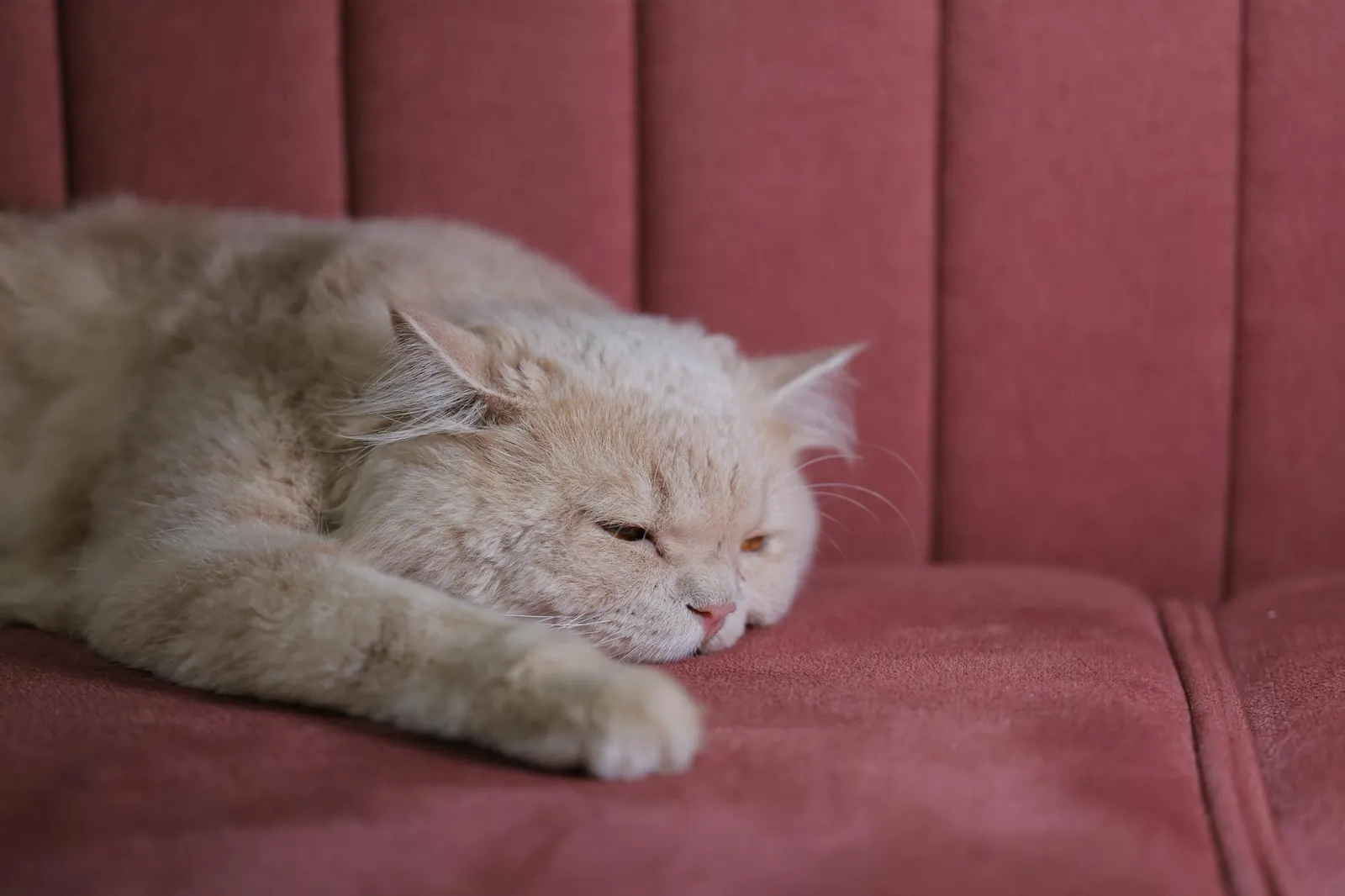
Persian Cat: Complete Breed Guide for UK Owners
The Persian is the cat everyone thinks they know. Long coat, flat face, permanently grumpy expression on cushions in a Victorian painting. But the Persian you see in most breeder photos today is not the same cat the British cat fancy standardised in the 1870s, and the difference matters. It matters for your cat's breathing, its eyes, its ability to eat dry food, and ultimately its vet bills. This guide covers what an honest UK Persian purchase looks like in 2026, why the breed has split in two, and what you are actually signing up for.
Persian at a Glance
| Origin | Persia (modern Iran), standardised in Britain 1871 |
| Average Weight | Males 4-6 kg, Females 3-5 kg |
| Lifespan | 12-17 years |
| Temperament | Calm, quiet, placid, affectionate on their terms |
| Average Cost (UK) | GBP 500-1,500 (registered breeder) |
| Good For | Calm indoor households, experienced groomers, retirees |
| Grooming | Very high - daily brushing is non-negotiable |
| Activity Level | Low |
| Recognised By | GCCF, TICA, FIFe |
A Brief, Honest History
Long-haired cats were imported from Persia and Turkey into Italy and France in the 1600s, then into Britain through the 1800s. The first modern breed standard was written in Britain in 1871, at the inaugural Crystal Palace Cat Show, which effectively invented the pedigree cat fancy as we know it. The Persian was always a long-haired, round-headed, short-nosed cat. It was never flat-faced.
The flat face came later. From the 1950s onwards, American breeders selected progressively for shorter and shorter muzzles, creating what is called the "peke-face" or "ultra" Persian. By the 1980s this had become the show-ring standard in the US, and it leaked back into UK breeding. The result is two very different cats sharing one name.
The Breed Split: Traditional vs Modern
Today in the UK you will encounter two distinct types of Persian, often without breeders being clear about which they are selling:
- Traditional or Doll-Face Persian. Longer muzzle, higher nose, normal eye placement, no breathing issues. Looks like the Victorian paintings. This is the Persian that existed for a hundred years before breeders decided a flatter face was better.
- Modern, Peke-Face or Ultra Persian. Severely shortened muzzle, nose at or above the lower eyelid, brachycephalic skull. Prone to breathing difficulties, dental crowding, chronic eye problems and corneal ulcers. This is what most show breeders produce.
The UK veterinary community has been increasingly vocal about extreme brachycephaly in cats, following the same trajectory as the concerns raised about Pugs and French Bulldogs in dogs. The British Veterinary Association and International Cat Care both advise prospective owners to seek out traditional, doll-face Persians specifically because the modern type has known welfare issues baked into the skull structure.
Temperament and Personality
Persians are famously calm. They are not lap-climbers in the way a Ragdoll is, and they are not vocal in the way a Siamese is. They are more like the British Shorthair: a cat that will sit near you, enjoy your company, accept affection when offered, and otherwise be perfectly content with its own dignified existence. If you want a cat that follows you to the bathroom, you want a different breed. If you want a quiet companion that will not shred your curtains or launch itself off the top of the kitchen units, a Persian fits beautifully.
They are selective about attention. A Persian will decide when it wants to be petted, and the answer is usually "for five minutes, on the sofa, not now." They are not cats that tolerate rough handling, and they are not suitable for homes with very young children who have not yet learned how to read a cat's body language. They are also not cats that enjoy being carted around in a carrier for social visits; they are homebodies.
Indoor-only, essentially always
Persians are not outdoor cats. The long coat picks up every twig, burr and piece of mud within half a mile. The flat-faced modern type cannot regulate body temperature efficiently in heat. The calm temperament means they do not evade cars or dogs with any speed. The coat also tangles catastrophically after a single wet afternoon outside. Every reputable UK breeder will sell Persians on the condition of indoor-only or secured outdoor access (a catio or cat-proof garden). Treat this as a rule, not a preference.
Health Issues to Know About
The Persian is one of the most genetically studied cat breeds and several serious conditions are over-represented in the breed. Responsible UK breeders screen for these. Less responsible breeders do not, and you will meet those cats a few years later in a specialist veterinary clinic.
Polycystic Kidney Disease (PKD)
PKD is an inherited condition where fluid-filled cysts develop in the kidneys, progressively replacing functional kidney tissue. Historically around a third of Persians carried the PKD1 gene mutation. A DNA test has been available since 2004, and the UK breed registries strongly encourage its use. Any breeder worth buying from will be able to produce a PKD DNA test result for both parents, showing them as clear. If they cannot, walk away. A cat that inherits PKD will usually start showing kidney failure between age 3 and 10, and the costs of managing chronic kidney disease run into thousands of pounds over the cat's life.
Brachycephalic Airway Syndrome
This is the one most visible to the public and the most often dismissed by breeders of peke-face cats. Shortened skulls cause narrowed nostrils, an elongated soft palate, and compressed sinuses. Symptoms include noisy breathing, open-mouth breathing at rest, heat intolerance, and exercise intolerance. Severe cases need surgical intervention. Milder cases are chronic but manageable. The simplest way to avoid it: buy a doll-face Persian from a breeder who has deliberately bred away from the extreme flat face.
Progressive Retinal Atrophy (PRA)
A degenerative eye condition that progresses to blindness, typically in the first few years of life. A DNA test exists for the PRA-pd mutation associated with Persians. Responsible breeders test and avoid producing affected kittens.
Hypertrophic Cardiomyopathy (HCM)
Less prevalent in Persians than in breeds like the Maine Coon or Ragdoll, but still present. No Persian-specific DNA test yet, so annual echocardiogram screening is the gold standard for breeding cats. Not routine for pet cats, but worth knowing about if your cat develops any lethargy or rapid breathing later in life.
Dental and eye issues
The shortened jaw of peke-face cats crowds teeth and causes malocclusion, meaning dental cleanings and extractions become a lifetime cost. The flat face also causes chronic tear overflow, staining the fur below the eyes and increasing the risk of corneal ulcers and entropion (eyelids that roll inward). Daily eye wiping is a reality for most modern Persians. Traditional doll-face Persians have far fewer issues here.
Grooming: The Daily Commitment
If you cannot or will not brush your cat every day, do not buy a Persian. This is not negotiable and it is not something you can solve with a monthly groomer visit. A Persian's coat is the longest and densest of any pedigree cat, and it mats with alarming speed. A coat that is brushed for ten minutes a day stays beautiful for a lifetime. A coat that is brushed once a week becomes a solid, painful mat that requires a full shave-down under sedation at a veterinary cost of GBP 150-300.
The daily routine should include:
- Brushing. Metal comb first, to find and work through any starting tangles, then a pin brush or slicker to lift the undercoat. Ten minutes minimum, every day, no skipping.
- Eye wiping. A soft cloth and warm water, or a specific tear-stain wipe. Once a day for doll-face cats, twice a day for peke-face.
- Ear checks. Weekly, for wax buildup. Persians have ears that sit close to the skull and can trap moisture.
- Bum trim. Yes, really. Persian sanitary areas need the fur trimmed short to prevent faecal contamination. Your vet or groomer can do this every few months.
- Full bath. Every 4-6 weeks for show cats, every 2-3 months for pet cats. Most Persians tolerate water far better than the average cat if introduced from kittenhood.
You will need a proper comb, a slicker brush, unscented pet shampoo, eye wipes and a willingness to enforce the routine even when the cat would rather not. Set aside the time before you buy. If you cannot, choose a shorthaired breed.
What a Persian Actually Costs in the UK
Purchase price is the smallest number involved. These are 2026 UK figures.
- Kitten from a GCCF-registered breeder. GBP 500-1,500. Expect doll-face pet-quality at the lower end, show-quality at the upper end. Anything below GBP 400 is a warning sign; anything advertised at GBP 3,000+ is marketing.
- Initial setup. Around GBP 200-300. Carrier, litter trays, food and water bowls, cat tree, scratch posts, grooming tools, brushes, nail clippers.
- First-year vet costs. Around GBP 300-500. Vaccinations, neutering, microchip if not already done, first health check.
- Pet insurance. GBP 25-60 per month. Persians are flagged as a higher-risk breed by most UK insurers due to the breed-specific conditions, particularly if you buy a peke-face.
- Food. GBP 30-80 per month depending on wet/dry mix. Flat-faced Persians often need wet food or specifically shaped kibble they can actually pick up.
- Grooming supplies. GBP 100-150 per year for brushes, shampoo, wipes.
- Professional groomer (optional). GBP 40-60 per session for a sanitary trim and full bath, every 2-3 months if you want the help.
Rough lifetime cost over 15 years: GBP 15,000 to 25,000 depending on health luck and insurance. For a fuller breakdown see how much does a cat cost in the UK.
Where to Buy, and What to Avoid
The Persian is one of the most commonly scammed breeds in the UK. The combination of high purchase price, strong demand and visually obvious breed type makes it a target for kitten farms and unscrupulous backyard breeders. A few rules that will save you money and grief.
Green flags
- GCCF or TICA registered. The breeder can produce the pedigree on request.
- Both parents on site, and you can see them.
- PKD and PRA DNA test results for both parents, dated and from a recognised lab.
- Kittens kept until at least 12 weeks, fully vaccinated and socialised indoors with the family.
- The breeder asks you questions. A good breeder is vetting you as much as you are vetting them.
- A written contract and a clear health guarantee.
Red flags
- Kittens ready to leave at 6-8 weeks. This is illegal under UK law before 8 weeks and premature even at 8.
- Multiple litters available year-round, multiple breeds from the same breeder, or kittens being met in car parks or motorway services.
- "Pedigree without papers" - a contradiction in terms. Walk away.
- No health testing results, or vague claims that "the parents are healthy."
- Prices far below or far above the GBP 500-1,500 range without a clear reason.
- Reluctance to let you see where the kittens are raised, or insistence on delivery.
Rescue Persians
Adoption is absolutely an option. The Persian Cat Club UK and several breed-specific rescues rehome Persians whose owners have underestimated the grooming commitment. Cats Protection and RSPCA occasionally have Persians too. Adoption fees are typically GBP 75-150 and include neutering, microchipping and initial vaccinations. See adopting a rescue cat in the UK for the full process.
Is a Persian the Right Breed for You?
Be honest with yourself. Persians are wonderful cats for the right household and miserable for the wrong one. A rough test:
A Persian is probably right for you if:
- You are home often, or there is someone who is, and you enjoy calm company over active play.
- You genuinely have ten minutes every single day for grooming, and you will not resent it after three months.
- You can commit to indoor-only living or a secure catio.
- You accept that regular vet bills for kidney, breathing or dental issues are possible, and you have insurance or savings to cover them.
- You want a quiet, dignified cat that will be there when you want it and absent when you do not.
A Persian is probably not right for you if:
- You have very young children or a boisterous household.
- You work long hours away from home and cannot commit to daily grooming.
- You want a cat that will play fetch, follow you everywhere, or sleep on your head at night.
- You want the Persian look without the Persian maintenance. Consider an Exotic Shorthair instead, which is essentially a short-coated Persian, though the brachycephalic concerns remain.
- You are buying on the assumption that "docile" means "easy." It does not.
Frequently Asked Questions
Are Persian cats hypoallergenic?
No. No cat is truly hypoallergenic, and the long Persian coat actually traps and spreads more of the Fel d 1 protein that causes allergic reactions. If allergies are a concern in the household, the Persian is one of the worse choices, not one of the better ones.
How long do Persian cats live?
Typically 12 to 17 years. Traditional doll-face Persians tend to live longer than peke-face Persians, simply because they have fewer breathing and dental issues compounding over time.
Do Persians get on with dogs?
Usually yes, if introduced young and the dog is calm. Persians are not cats that will stand up to a boisterous terrier, but they cohabit peacefully with gentle dogs.
Can I shave my Persian in summer?
You can, and many UK owners opt for a "lion cut" in summer. It does not harm the cat. The coat grows back within a few months. Done by a groomer, it costs GBP 40-80 and is far less stressful than a full mat removal.
Do Persians purr loudly?
Not particularly. They tend to be quiet purrers and very quiet vocalists overall. Persians are one of the most soft-spoken breeds, which is part of their appeal.
What is the difference between a Persian and a Himalayan?
Himalayans are colourpoint Persians, the result of crossing Persians with Siamese in the 1950s to introduce the Siamese pointing pattern. The GCCF treats them as a separate breed; TICA treats them as a variety of Persian. Temperament and care are identical to a standard Persian.