Some links on this page are Amazon affiliate links. If you buy through them CatBasket may earn a small commission, and the price you pay does not change.
Birman Cat: Breed Guide for UK Owners
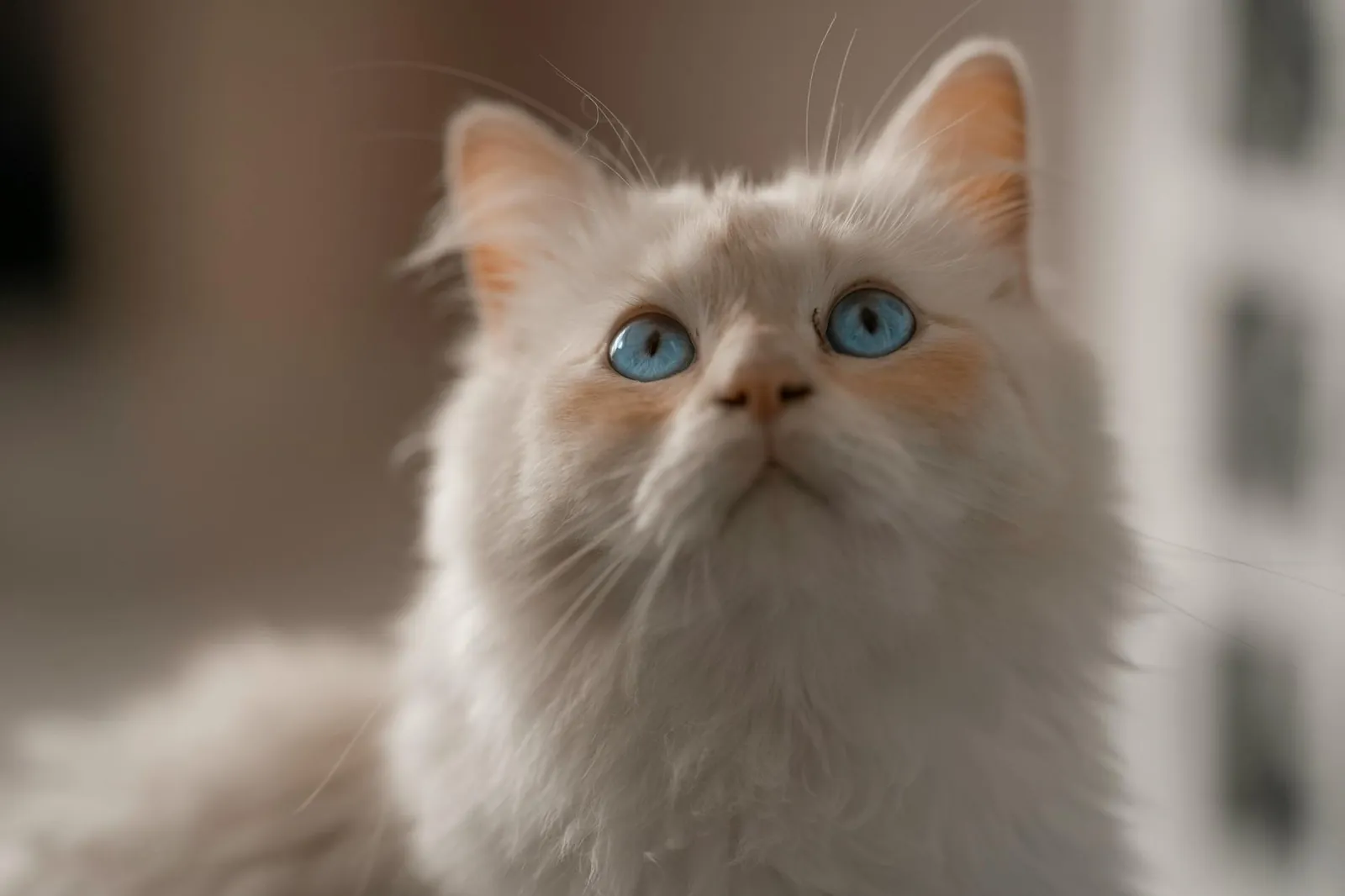
The Birman is a semi-longhaired, colourpointed cat with blue eyes and four white paws, known for a gentle, sociable temperament that suits families and other pets. It needs a weekly comb, lives 12 to 16 years, and its main inherited risk is the heart disease HCM.
| Birman at a glance | |
|---|---|
| Weight | Females about 2.7 to 4.5kg, males 4.5 to 6.8kg |
| Lifespan | 12 to 16 years |
| Coat | Semi-long and silky, little tendency to mat; comb weekly |
| Colours | Seal, blue, chocolate, lilac, red and cream points, plus tortie and tabby points |
| Temperament | Sociable, gentle, follows people about, soft chirping voice |
| Health checks to ask for | Heart scans (HCM) on the parents |
| Registered in the UK by | GCCF, TICA |
Weights, lifespan and colours from the GCCF Birman breed profile.
What are Birman cats like?
Birmans are friendly, people-focused cats that follow their owners from room to room and get on with children, other cats and cat-friendly dogs.
They are less inclined to hunt than many breeds and are not especially loud. Their voice is a soft chirp, and the GCCF notes that a Birman talks more if you answer it. Compared with the Ragdoll, the Birman is smaller and a little busier; compared with the Siamese, it is much quieter.
The defining look is the gloving: pure white front paws that end in an even line, and white socks on the back feet that run up the back of the leg to just below the hock. Kittens are born white and the points and gloves appear over the first weeks, so breeders cannot always promise show-standard markings in a young litter. Pet-quality kittens with uneven gloves are the same cat in every way that matters at home.
The breed's story starts with a temple legend from Burma, but the documented history starts in France around 1919, where the Western Birman population descends from a single imported female. The GCCF recognised the breed in 1966, and it is regularly in the GCCF's top ten registrations.
Are Birman cats hypoallergenic?
No, Birmans are not hypoallergenic: they produce the same main allergen, Fel d 1, as every other cat, and their longer coat spreads it around the house.
The allergen comes from saliva and skin, not the hair itself, so a low-shedding coat does not remove it. If someone in the house is allergic, spend a few hours with adult Birmans before committing, ideally in the breeder's home.
Do Birman cats shed?
Yes, Birmans shed moderately all year and heavily in spring, when they drop their winter coat.
The coat has little woolly undercoat, which is why it rarely mats. A weekly comb through with a wide-toothed metal comb removes loose hair and spreads the skin oils; comb every day or two during the spring moult. A stainless steel grooming comb is all this coat needs. Check the eyes and ears weekly and trim the claws every few weeks if the cat lives indoors. For other tools, see the cat brush guide.
Do Birman cats have health problems?
Birmans are generally healthy, but hypertrophic cardiomyopathy (HCM), a thickening of the heart muscle, is the main inherited risk, and there is a very low risk of polycystic kidney disease (PKD).
HCM is the most common heart disease in cats. The GCCF describes it as thought to be inherited as a dominant trait in Birmans, and it can lead to heart failure or sudden death. There is no DNA test for the Birman form, so breeders screen breeding cats with heart scans (echocardiograms). Ask to see recent scan reports for both parents.
PKD causes cysts in the kidneys and is far more of an issue in Persians. A DNA test exists, so a breeder who has tested for it can show you the result.
For the problems that affect all cats, such as dental disease, weight gain and kidney disease in older age, see common cat health problems.
How long do Birman cats live?
Birmans typically live 12 to 16 years, according to the GCCF.
Keeping a Birman at a healthy weight and booking a yearly vet check, with dental checks as it gets older, gives it the best chance of reaching the upper end of that range.
Can Birman cats go outside?
Birmans can go outside, but many UK owners keep them indoors or give them a secure garden, because they are trusting, expensive cats with little road sense.
Their low hunting drive and people-focus mean most Birmans settle well indoors, as long as they have company, climbing space and play every day. Birmans do not cope well with long days alone, so if the house is empty from eight till six, a second cat helps. The trade-offs between the two lifestyles are set out in indoor vs outdoor cats.
What a Birman costs
Pets4Homes' Birman breed guide puts a well-bred pedigree kitten at "upwards of £500", and registered, health-tested kittens from established breeders usually cost more than that floor.
Only a handful of Birmans were advertised on Pets4Homes when we checked on 28 September 2026, at £450 to £1,000, too few to call a typical price. Treat a listing at the bottom of that range with caution unless it comes with registration papers and heart-scan results for the parents.
Birmans are not bred in large numbers in the UK, so expect a waiting list with a registered breeder. Ask for GCCF or TICA registration, HCM scan results for the parents, and a kitten of at least 13 weeks. A "Birman cross" or "Birman type" at a pedigree price is usually a Ragdoll or longhair cross. Running costs are set out in how much a cat costs in the UK, and rescue routes in adopting a rescue cat.
Prices checked September 2026.