Common Cat Health Problems in the UK: The Signs to Watch For
The health problems UK vets see most in cats include dental disease, excess weight, bladder problems, kidney disease, an overactive thyroid, diabetes, fleas, cat flu and arthritis. Most are manageable when caught early, and the first signs are usually small changes in eating, drinking, weight, litter tray habits or how your cat moves.
Last updated 28 September 2026. Guidance checked 28 September 2026 against PDSA, Cats Protection and International Cat Care (sources at the end). This page helps you spot changes worth mentioning to a vet. It cannot tell you what is wrong with your cat; only a vet can.
Some links on this page are Amazon affiliate links. If you buy through them CatBasket may earn a small commission, and the price you pay does not change. We only link to product types that the vet charities mentioned on this page recommend.
In short
- A cat straining in the litter tray with little or nothing coming out, or breathing with its mouth open, needs a vet now.
- Drinking more, losing weight while eating well, and going off hard food are the changes owners most often miss.
- Cats hide pain. An older cat that stops jumping on the bed hasn't simply got old; it may be sore.
- A yearly check-up catches much of this early. PDSA suggests regular check-ups from about 8 years old.
When should I take my cat to the emergency vet?
Call a vet immediately, day or night, if your cat is struggling to pee, struggling to breathe, collapses, has a seizure, may have been poisoned, or has been hit by a car or had a fall. PDSA and Cats Protection both say not to wait and see with these:
- Straining in the litter tray and passing little or no urine. A blocked bladder can kill, and PDSA says male cats are much more likely to get one.
- Panting, breathing with the mouth open, or visibly struggling for breath. Cats do not pant like dogs.
- Suddenly crying out and unable to use one or both back legs, which can be a blood clot.
- Any suspected poisoning, even before symptoms show. Cats Protection names lilies, antifreeze and human painkillers such as paracetamol and ibuprofen as common dangers; one tablet can be fatal.
- A road accident or a fall, even if the cat seems fine, because internal injuries do not show.
- A seizure, collapse, or a cat that is suddenly weak and dull.
Find your nearest out-of-hours vet now and save the number in your phone. Hunting for it at 2am with a sick cat is miserable.
What are the signs of dental disease in cats?
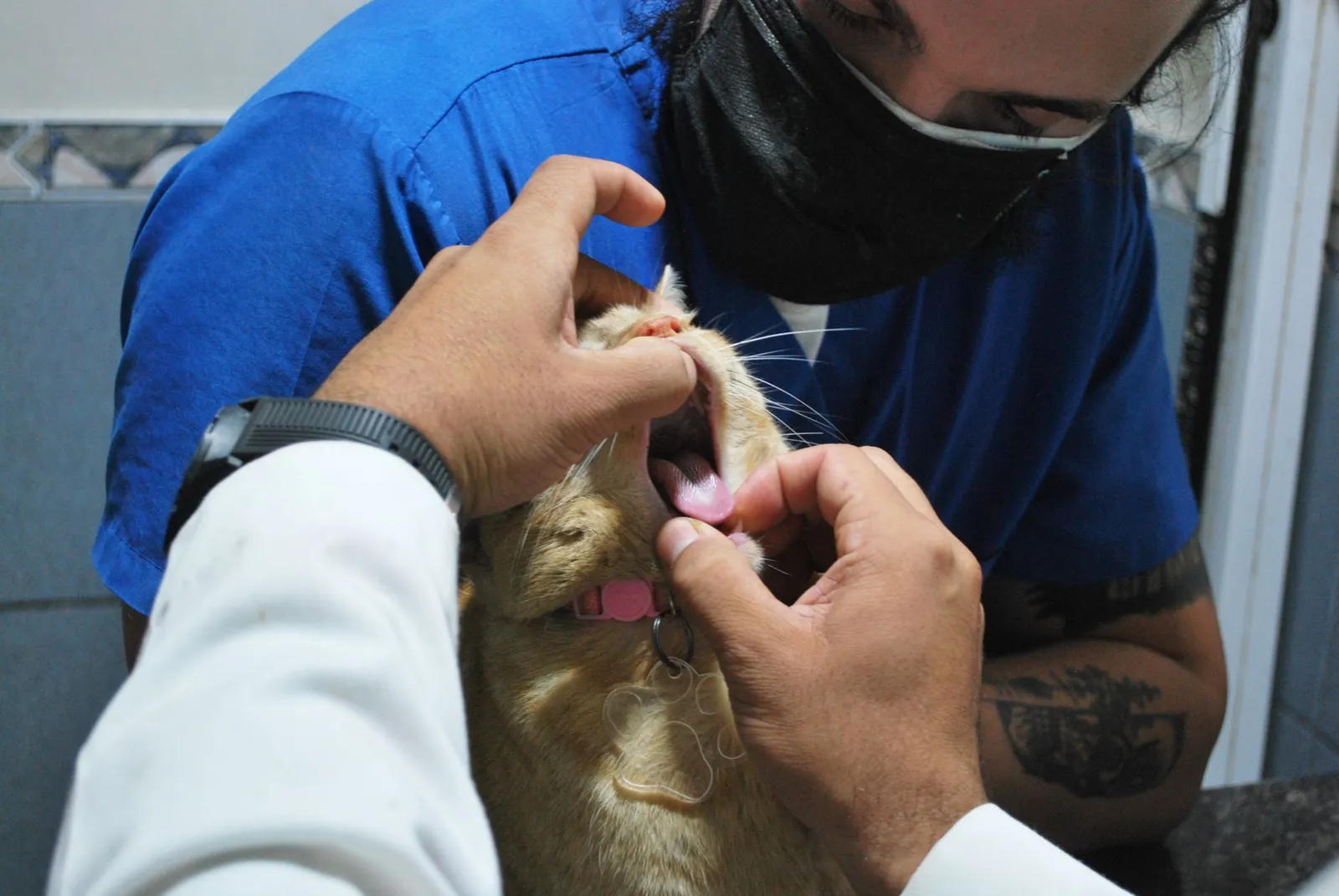
The main signs of dental disease in cats are bad breath, red or bleeding gums, visible tartar, dropping food, chewing on one side and going off dry food. PDSA notes that tooth resorption, one type of dental disease, affects more than a third of pet cats at some point, and it gets more common with age. Because cats hide mouth pain, many only show signs when the problem is advanced.
Vets treat it with pain relief, a scale and polish under anaesthetic, and extractions where needed. PDSA says cats cope very well after having teeth removed.
Daily brushing with a cat toothpaste is the most effective prevention, according to PDSA. Plenty of cats won't have it, and if yours is one of them, dental treats and gels are a fallback rather than a replacement. Start with a finger brush and a few seconds a day.
Cat toothpaste and finger brushes
See your vet if your cat has bad breath, sore-looking gums or is dropping food. Go urgently if it has stopped eating, has a broken tooth or cannot close its mouth.
How do I know if my cat is overweight?
Your cat is probably overweight if you cannot feel its ribs without pressing, or if it has no visible waist when you look down on it from above. PDSA estimates that over a third of UK cats are overweight. It matters because extra weight raises the risk of diabetes, bladder problems, arthritis and liver disease.
PDSA's advice for bringing weight down:
- Weigh food on kitchen scales, and base the amount on your cat's ideal weight rather than its current weight.
- Split the daily allowance into several small meals.
- Count treats as part of the daily food, not on top of it.
- Play with your cat every day.
Ask your vet for your cat's target weight. PDSA notes that many practices now run weight management clinics.
What are the signs of cystitis in cats?
Signs of cystitis in cats include frequent trips to the litter tray, straining, passing small amounts, blood in the urine, crying while peeing and licking the genital area. PDSA says the most common type, feline idiopathic cystitis, is usually triggered by stress: a house move, building work, a new pet or tension between cats in the same home.
To lower the risk, PDSA suggests getting more water into your cat (wet food, several water bowls, a fountain), daily play, keeping routines steady, and at least one litter tray per cat plus one extra.
Cat water fountains · our cat water fountain guide
See your vet immediately if your cat keeps going to the tray and passing nothing. That can be a blocked bladder, which is an emergency, especially in male cats.
Why is my cat drinking so much water?
A cat that suddenly drinks a lot more needs a vet check, because PDSA lists kidney disease, diabetes, an overactive thyroid and urine infections among the common causes. Cats get much of their water from food, so a bowl emptying faster than usual, drinking from taps or bigger clumps in the litter tray are all worth noting.
Kidney disease is especially common in older cats. PDSA lists increased thirst, weight loss, a poor appetite, vomiting and breath that smells of urine as signs. It cannot be cured, but PDSA says cats can live for months to years with a kidney diet, medication and regular monitoring. Blood and urine tests at an older cat's yearly check can pick it up before the signs are obvious.
Before the appointment, measure how much your cat drinks in 24 hours and, if you can, collect a urine sample; PDSA says both help your vet. Never cut down your cat's water to see what happens.
Why is my cat losing weight but still eating?
Weight loss in a cat that is still eating well can be caused by an overactive thyroid, diabetes or worms, among other things. PDSA says to contact your vet if you think your cat has lost weight. It is easy to miss in a fluffy cat. Run your hands along the spine and hips every few weeks, or weigh your cat on the bathroom scales: weigh yourself holding the cat, then without, and take the difference.
An overactive thyroid (hyperthyroidism) mostly affects middle-aged and older cats. PDSA lists a big appetite with weight loss, restlessness, drinking more, vomiting and a scruffy coat as signs. Treatment options are tablets, a special diet, surgery or radioactive iodine, and PDSA says the vast majority of cats can be treated successfully.
Diabetes is more likely in overweight, middle-aged and older cats. Signs include thirst, peeing more, a bigger appetite and weight loss. It is usually managed with insulin injections, typically twice a day, and a high-protein diet, and some cats go into remission, especially if they lose weight and are treated quickly.
See your vet urgently if a diabetic cat stops eating, vomits, becomes weak or collapses.
When should I worry about my cat being sick?
Call your vet if your cat vomits more than once, seems unwell or has any other symptoms, according to PDSA. Most cats vomit now and then, and a single hairball in a cat that is otherwise bright and eating normally is usually fine to watch at home.
PDSA says to contact your vet immediately if vomiting lasts more than 24 hours, your cat cannot keep food or water down, it is very young or old, or there is blood in the vomit, diarrhoea, pale gums, tummy pain or lethargy.
For long-haired cats, regular brushing cuts down how much fur they swallow. Our cat brush guide covers which brushes suit which coats.
How do I know if my cat is in pain?
A cat in pain usually changes its behaviour rather than crying out. Cats Protection says it may hide more, sleep more, hesitate before jumping down, sit hunched with squinting eyes, eat less, groom less (or overgroom one spot) or become grumpy when handled. Some cats even purr when they are in pain.
Arthritis is a common cause in older cats. PDSA cites research that found signs of it on X-rays in 90% of cats over 12. Owners often put the changes down to age: the cat stops jumping on the bed, its back end gets matted, or it starts going next to the litter tray because the sides are too high. PDSA suggests these home changes alongside vet treatment:
- ramps or steps up to favourite spots
- a litter tray with a low side to step over
- soft, warm beds within easy reach, including heated pads
- raised food and water bowls
Low-entry litter trays · Self-heating pet pads · Pet steps
See your vet if you notice any of these changes. Pain relief prescribed by a vet can make a real difference to an arthritic cat.
Fleas: signs and why the house needs treating too
Fleas cause scratching, hair loss, sore skin and flea dirt (tiny black specks) in the fur, often on the lower back and near the base of the tail. Not every cat with fleas shows symptoms. PDSA's figure that surprises most owners is that 95% of an infestation is in the home rather than on the cat, and young fleas can wait in the carpet and furniture for months before they hatch and jump on.
That is why PDSA says to treat the cat, every other pet in the house on the same day, and the home itself with a household flea spray, then keep up regular vacuuming and wash bedding at 60°C. Fleas can pass on tapeworm, so worm your cat at the same time. Your vet can advise on which flea treatment suits your cat.
Cat flu: sneezing, sore eyes and mouth ulcers
Cat flu causes sneezing, runny eyes and nose, mouth ulcers, fever and a poor appetite, partly because a cat that cannot smell its food often won't eat it. It spreads easily between cats but, PDSA says, does not affect humans or other animals. Many cats that recover stay carriers and can have flare-ups when stressed.
At home, wipe away discharge, offer strong-smelling food and let your cat sit in a steamy bathroom if it wants to. Vaccination does not always stop infection, but it reduces symptoms; see our cat vaccination schedule.
See your vet if your cat has cat flu symptoms. Kittens can go downhill quickly, so call the same day for a kitten.
Sources
- Cats Protection: cat first aid, poisoning and signs of pain
- PDSA: blocked bladder, breathing problems, dental disease, obesity, stress cystitis
- PDSA: drinking and weeing too much, chronic kidney disease, weight loss, hyperthyroidism, diabetes
- PDSA: vomiting, arthritis, fleas, cat flu