Stress in Cats: Signs, Causes and How to Reduce It
A stressed cat may hide more, over-groom, wee or spray outside the tray, or eat differently, though pain and illness can cause the same changes. To reduce it, get a vet check first, then give each cat its own food, water, litter tray, bed and hiding place, keep the routine steady and deal with whatever set it off.
Last updated 28 September 2026. Advice checked 28 September 2026 against Cats Protection, PDSA and RSPCA guidance, listed under Sources at the end.
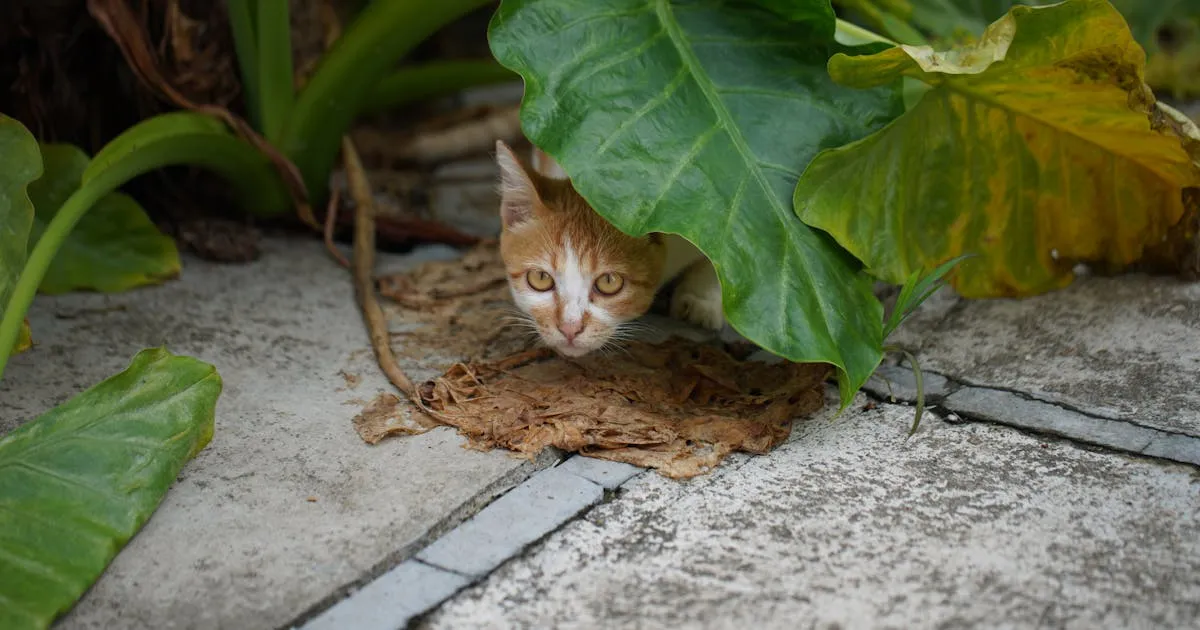
Photo on Pexels
In short
- Stress shows up as behaviour: hiding, over-grooming, weeing or spraying indoors, and changes in eating or play.
- The same signs can mean pain or illness, so the vet comes first. Cats Protection and PDSA both say so.
- Most fixes are about the home: enough resources for every cat, places to hide and climb, and a steady routine.
- Plug-in diffusers are optional and work best alongside other changes. The evidence for them is thin.
- If changes at home don't help, ask your vet about a referral to a qualified behaviourist.
What are the signs of stress in cats?
The clearest signs of stress in cats are hiding, over-grooming, weeing or spraying in the house, and a change from the cat's normal behaviour. PDSA and the RSPCA list these:
- hiding or staying out of the way all the time, or avoiding certain rooms, pets or people
- grooming much more than usual, sometimes to the point of hair loss
- peeing in the wrong place, spraying indoors, or blood in the urine
- changes in eating or toileting habits
- looking tense, for example hunched rather than stretched out when resting
- a sudden change in character: a sociable cat wanting to be alone, a playful cat that stops playing, or a gentle cat that starts to hiss or swipe
- low energy and a poor coat
Body language gives you the moment-to-moment picture. Cats Protection describes a stressed cat's ears as flat, its eyes open with wide pupils and its whiskers pointing forward or curving down. Sudden changes are the easiest to spot, but a cat that has hidden or avoided people for a long time may also be stressed, and deserves the same attention.
What causes stress in cats?
Stress in cats usually comes from a change to their home, their routine or the other animals around them. PDSA and Cats Protection name these common causes:
- changes at home: moving house, new furniture, redecorating, building works, or moving the cat's bowls and tray
- not enough resources, so the cat has to compete for food, water, beds or litter trays
- other cats, whether in a multi-cat household or neighbourhood cats coming into the garden or house
- a new pet, a new baby or visitors staying
- changes in routine, such as feeding times or your working hours
- fireworks and loud noise
- being handled in ways the cat doesn't like
Pain belongs on this list too. Cats Protection's list of pain signs includes hiding more than usual, becoming less tolerant of people and over-grooming, which are the same things you would call stress. A cat with sore joints or teeth can look like a nervous cat.
Can stress make a cat ill?
Yes. PDSA describes stress cystitis, an inflamed bladder linked to stress, as a painful and potentially dangerous problem for cats, and Cats Protection lists stress among the causes of lower urinary tract disease. Signs include straining, passing small amounts often, crying when peeing and blood in the urine. Over-grooming can also leave bald patches, though the same patches can come from fleas, allergies or skin disease.
See your vet if you notice any of those signs, or weight loss, repeated vomiting or diarrhoea. Call a vet straight away if your cat is straining and passing little or no urine. Cats Protection says being unable to pass urine is an emergency, and male cats are at higher risk.
How do I calm a stressed cat?
Calm a stressed cat by giving it control: somewhere to hide, somewhere high, enough of everything, and a predictable day. Once your vet has ruled out a medical cause, these are the changes the charities recommend:
- Resources for every cat. Cats Protection's rule is one of everything per cat plus a spare: food bowls, water, litter trays, beds and scratching posts, spread around the house rather than lined up in one place. PDSA adds constant access to water.
- Hiding places. The RSPCA says a cat should always have access to safe hiding places where it can escape if it feels afraid. A cardboard box counts.
- Height. A shelf, a cleared windowsill or a cat tree gives a nervous cat somewhere to watch from.
- Routine. PDSA points out that changes in routine can be very stressful for cats, so keep feeding and play at the same times, especially around changes you can't avoid.
- Play. Short daily sessions with a wand toy give the cat something to do with nervous energy.
- No punishment. Cats Protection is blunt about this: punishing a cat for "misbehaving" never helps and may stress it more.
Don't force contact. Let the cat come to you, and leave it alone when it has chosen to hide.
Some links below are Amazon affiliate links. If you buy through them CatBasket may earn a small commission, and the price you pay does not change. We chose the product types from the charity guidance on this page, not from commission rates.
Covered cat beds · Cat wall shelves · Cat wand toys · Our cat tree guide
How can I reduce stress in my cat when moving house?
Give your cat one safe room at each end of the move and keep it there until the rest of the house is quiet. Cats Protection's moving advice runs like this:
- Before the move, set up a safe room with the cat's familiar bed and blanket, litter tray, carrier and food bowl, and keep it there while you pack. Cats Protection suggests a plug-in diffuser during the run-up.
- On moving day, feed a small meal. If your cat gets travel sick, it suggests withholding food for three to four hours before the journey.
- At the new house, keep the cat in a new safe room for a few days before giving it the run of the place. Familiar smells help it settle, so bring its unwashed bedding.
- Keep an outdoor cat indoors for at least three weeks, so it learns that the new house is home.
How do I reduce stress between cats?
Reduce stress between cats by making sure no cat has to share, or pass another cat, to get to what it needs. Put food, water, litter trays and beds in several separate spots, not in one room, so a cat that guards a doorway can't block the others. The RSPCA notes that many cats would prefer to be the only cat, and that a new cat needs a slow introduction starting with scent: our rescue cat settling guide covers the steps.
Neighbourhood cats are a common trigger for indoor spraying. A microchip cat flap stops them coming in; see our microchip cat flap guide. If the problem is a cat staring in through a window, frosted film on the lower pane or moving the furniture your cat sits on can take the view away. In the garden, Cats Protection suggests close planting, high close-boarded fences and motion-activated sprinklers to keep visiting cats out, and warns that harming a cat with any deterrent could be an offence under the Animal Welfare Act 2006.
What the evidence says about plug-in diffusers
Plug-in pheromone diffusers such as Feliway release a synthetic version of a cat's own scent signals that people can't smell. Cats Protection recommends them as one part of helping a stressed cat, but says they may not be very effective used on their own and should sit alongside medical and behavioural advice. It also says there is no set timeline for them to work: some owners see a change within a few days, others after a week or so. The research is thin. A 2010 systematic review in the Journal of the American Veterinary Medical Association found that most studies of feline facial pheromone were too weak to show whether it works. If you try one, change the home at the same time, so the diffuser isn't the whole plan.
When should I see a vet or a behaviourist?
See your vet first, as soon as you notice stress signs, because pain and illness can look exactly like stress. Cats Protection puts a vet visit at the top of the list, and says your vet can rule out anything medical before recommending a behaviourist. If you've made changes at home for a few weeks without improvement, ask for a referral.
Anyone can call themselves a pet behaviourist. Cats Protection recommends a behaviourist on the register of the Animal Behaviour and Training Council (ABTC), because registered practitioners meet set standards and follow a code of conduct, and notes that behaviourists usually work on referral from your vet. Some pet insurance policies cover behavioural consultations, so check yours before you book. For severe or long-running anxiety your vet may talk to you about medication, which is always used alongside changes to the cat's home and routine.
Sources
- PDSA: preventing stress in cats (signs, causes, stress cystitis, prevention)
- RSPCA: cat behaviour (signs of stress and fear, hiding places, vet and behaviourist)
- RSPCA: cats and company
- Cats Protection: cat stress (body language, causes, vet first, diffusers as one part of a plan)
- Cats Protection: pheromone therapy
- Cats Protection: urinary problems
- Cats Protection: signs of pain
- Cats Protection: introducing cats (one of everything per cat plus a spare)
- Cats Protection: managing cat behaviour (never punish)
- Cats Protection: moving home with your cat
- Cats Protection: keeping cats out
- Cats Protection: finding a behaviourist
- Frank D, Beauchamp G, Palestrini C. Systematic review of the use of pheromones for treatment of undesirable behavior in cats and dogs. Journal of the American Veterinary Medical Association, 2010.