Cat Vaccination Schedule UK: What Your Cat Needs and When
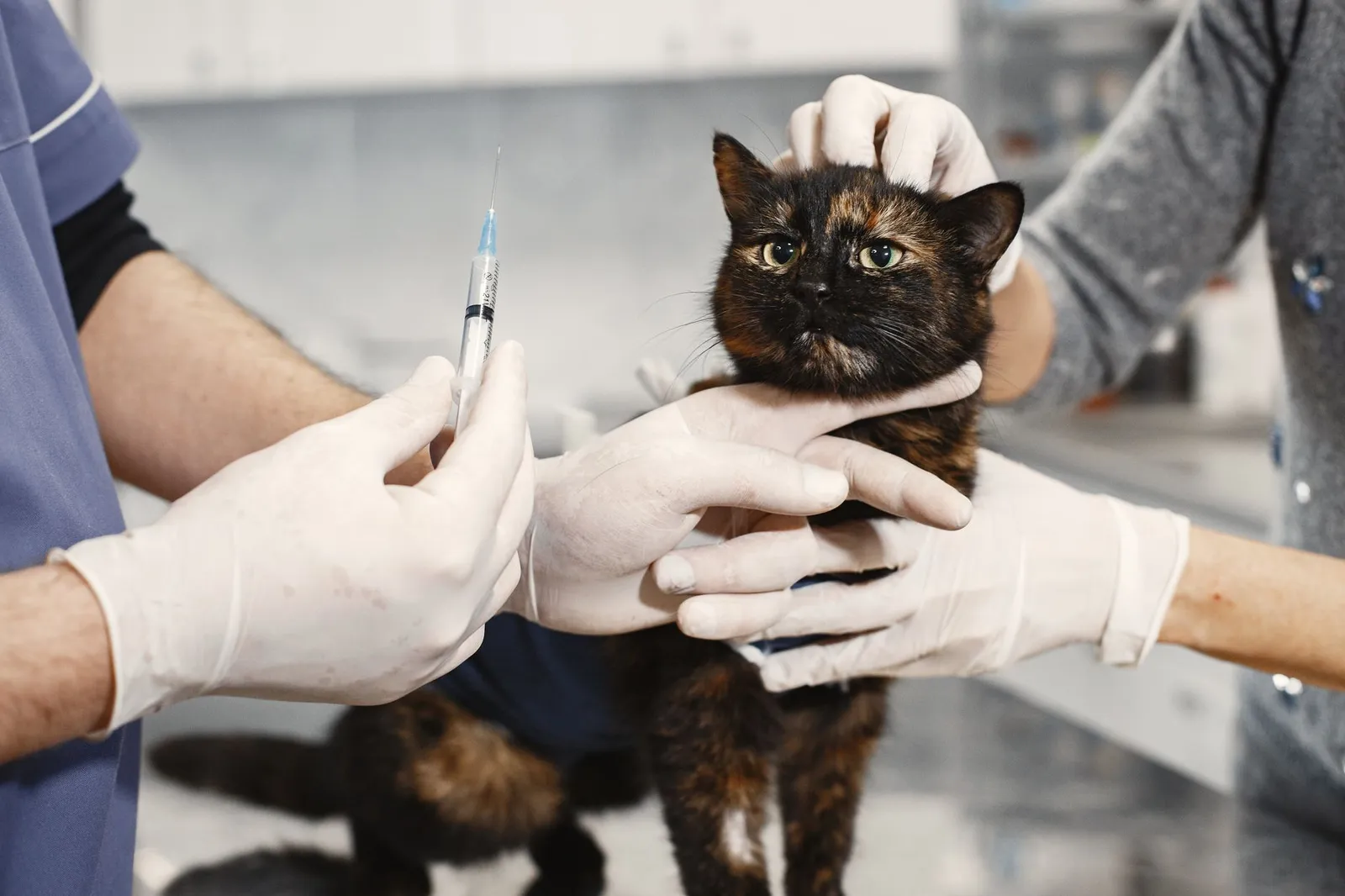
UK kittens usually have two vaccinations three to four weeks apart, often at about 9 and 12 weeks old, and are protected three to four weeks after the last one. A booster follows a year later, then boosters every one to three years depending on the vaccine. Indoor cats still need the core jabs.
Last updated 28 September 2026. Guidance checked 28 September 2026 against PDSA, International Cat Care, Cats Protection, the RSPCA and GOV.UK (sources at the end). This page explains the usual schedule; your vet sets the one for your cat.
In short
- Every cat, indoor or outdoor, should have the core vaccines: cat flu (feline herpesvirus and calicivirus) and feline parvovirus, also called panleukopenia or infectious enteritis.
- Cats that go outside, or live with cats whose status is unknown, should also be vaccinated against feline leukaemia virus (FeLV).
- Keep a kitten indoors until three to four weeks after its final primary jab.
- If a booster is badly overdue, your vet may restart the course with two injections.
What vaccines do cats need in the UK?
Every cat in the UK needs protection against cat flu and feline parvovirus, and cats that go outdoors also need the feline leukaemia virus (FeLV) vaccine. PDSA and International Cat Care call the first two "core" because the diseases are serious and spread easily. Parvovirus attacks the gut and immune system and can kill kittens; cat flu causes sneezing, sore eyes and mouth ulcers, and can be dangerous in kittens and older cats.
The rest depend on how your cat lives:
- FeLV spreads through fighting, mutual grooming and shared bowls and litter trays, according to iCatCare. Vets recommend it for cats with outdoor access or with housemates of unknown FeLV status.
- Chlamydophila felis causes eye infections. PDSA suggests it only where cats already have problems with the infection, which usually means multi-cat homes or breeding catteries.
- Rabies is not present in the UK, so your cat only needs this vaccine to travel abroad. GOV.UK says the cat must be at least 12 weeks old and microchipped before or at the same time as the jab, and after a first rabies vaccination you must wait 21 days before travelling. The rules depend on the destination, so check GOV.UK for the country you are going to.
Your vet may call this first set of injections the "primary course" or just "the kitten jabs".
When do kittens have their first vaccinations?
Kittens can have their first vaccinations from around 8 to 9 weeks old, with a second injection three to four weeks later. PDSA says this is usually at 9 and 12 weeks. Some kittens need a third dose: PDSA mentions 15 weeks, and International Cat Care recommends a third dose at 16 to 20 weeks, so ask your vet which approach they use.
| Age | What usually happens |
|---|---|
| 8 to 9 weeks | First injection: cat flu and parvovirus, plus FeLV if needed. Often done by the breeder or rescue before the kitten leaves. |
| 12 weeks (3 to 4 weeks later) | Second injection of the same vaccines. |
| 15 to 20 weeks | A third dose, if your vet recommends one. |
| About 15 months (12 months after the primary course) | First booster. |
| Every year after that | A booster appointment. Which vaccines are included varies from year to year. |
If your kitten arrives with a vaccination card showing only the first injection, book the second with your own vet so it falls three to four weeks after the first. Take the card to your first appointment so the practice can record what has already been given. Rescue kittens from the RSPCA are vaccinated before they leave its care.
When can my kitten go outside after vaccination?
Your kitten can go outside once it is fully protected, which PDSA puts at three to four weeks after the final injection of the primary course. Before that, keep it indoors and away from unvaccinated cats. The RSPCA also advises keeping a kitten in until it has been neutered, so for most kittens the first trip out comes after both.
First outings are best short, supervised and before a meal, so the kitten comes back when you rattle the food. Get it microchipped before it goes out. Separately, the law in England says every pet cat must be chipped before it is 20 weeks old, which Cats Protection explains has applied since 10 June 2024.
How often do cats need vaccines?
After the first booster at around 15 months, cats need boosters every one to three years, depending on the vaccine and the cat's risk. That is the guidance from both PDSA and International Cat Care. Some components last longer than others, which is why most vets still book an appointment every year even when not every vaccine is due.
So one year the booster might be cat flu only, and the next year cat flu plus parvovirus. The yearly visit usually includes a health check too, which is worth having: it is often the only time a vet examines a healthy adult cat's teeth, heart and weight. Cats Protection advises a yearly booster, so don't be surprised if your vet recalls you annually.
From 23 December 2026, larger vet groups must publish prices for basic services including vaccinations. Our guide to the new vet rules explains what changes.
Do indoor cats need vaccines?
Yes, indoor cats need the core vaccines against cat flu and parvovirus. PDSA explains that these viruses are very infectious and can travel into your home on clothes, shoes and other surfaces, so a cat that never goes outside can still catch them. It also matters if your indoor cat ever has to go into a cattery or to the vet, where it will be near other cats.
FeLV is a different calculation. It spreads through close contact between cats, so a truly indoor-only cat that lives alone or with FeLV-negative cats is at low risk. Many vets will not push the FeLV vaccine for that cat. "Truly indoor" means no balcony visits from the neighbour's tom, though. Talk it through with your vet.
What happens if my cat's booster is overdue?
If a booster is only a few weeks late, book it now and your vet will usually give a normal booster. PDSA says a cat with an overdue booster might keep some protection for two to three months, after which it is at risk.
If the gap is longer, your vet may restart the primary course: two injections three to four weeks apart, as if your cat were a kitten. Whether that is needed depends on the vaccine and how long the gap has been, so ask your vet. It is never too late to vaccinate an adult cat; it may just take two appointments instead of one.
Two practical knock-ons: a lapsed cat can be turned away from a cattery, and Cats Protection notes that most insurers require vaccination for your cover to be valid. Check the wording of your own policy.
What are the side effects of cat vaccinations?
Most cats have no side effects, and the ones that do show up are mild and pass within 24 to 48 hours. PDSA lists a high temperature, low energy and reduced appetite; International Cat Care adds tenderness where the needle went in. Let your cat sleep it off somewhere quiet.
A rare but serious side effect is a type of tumour called an injection-site sarcoma. International Cat Care puts it at fewer than 1 in 20,000 vaccinations, and says a lump at the injection site that lasts more than two to three weeks should be checked by a vet.
See your vet straight away if your cat has facial swelling, difficulty breathing, repeated vomiting or collapses after a vaccination. Call your vet if it has stopped eating altogether, or if mild tiredness or a reduced appetite has not passed after two days.
What vaccines do cats need for a cattery?
Catteries usually ask for proof that your cat's core vaccinations are up to date, and PDSA describes vaccination as usually compulsory for cattery stays. Each cattery sets its own rules, so ask when you book. Some want to see the booster given a set time before the stay so that immunity has built up.
Keep the vaccination card somewhere you can find it and take a photo of it. If the card is lost, your vet can print the record for you.
Sources
- PDSA: cat and kitten vaccinations (core vaccines, kitten ages, overdue boosters, indoor cats, side effects, catteries)
- International Cat Care: vaccinating your cat (third kitten dose, booster intervals, FeLV spread, injection-site sarcoma)
- Cats Protection: vaccinations (starting age, yearly boosters, insurance and catteries)
- RSPCA: cat vaccinations (keeping kittens in until vaccinated and neutered)
- Cats Protection: microchipping your cat (the England microchipping law)
- GOV.UK: taking your pet abroad, rabies vaccination
- WSAVA 2024 vaccination guidelines for dogs and cats (the international guidance vets work from)