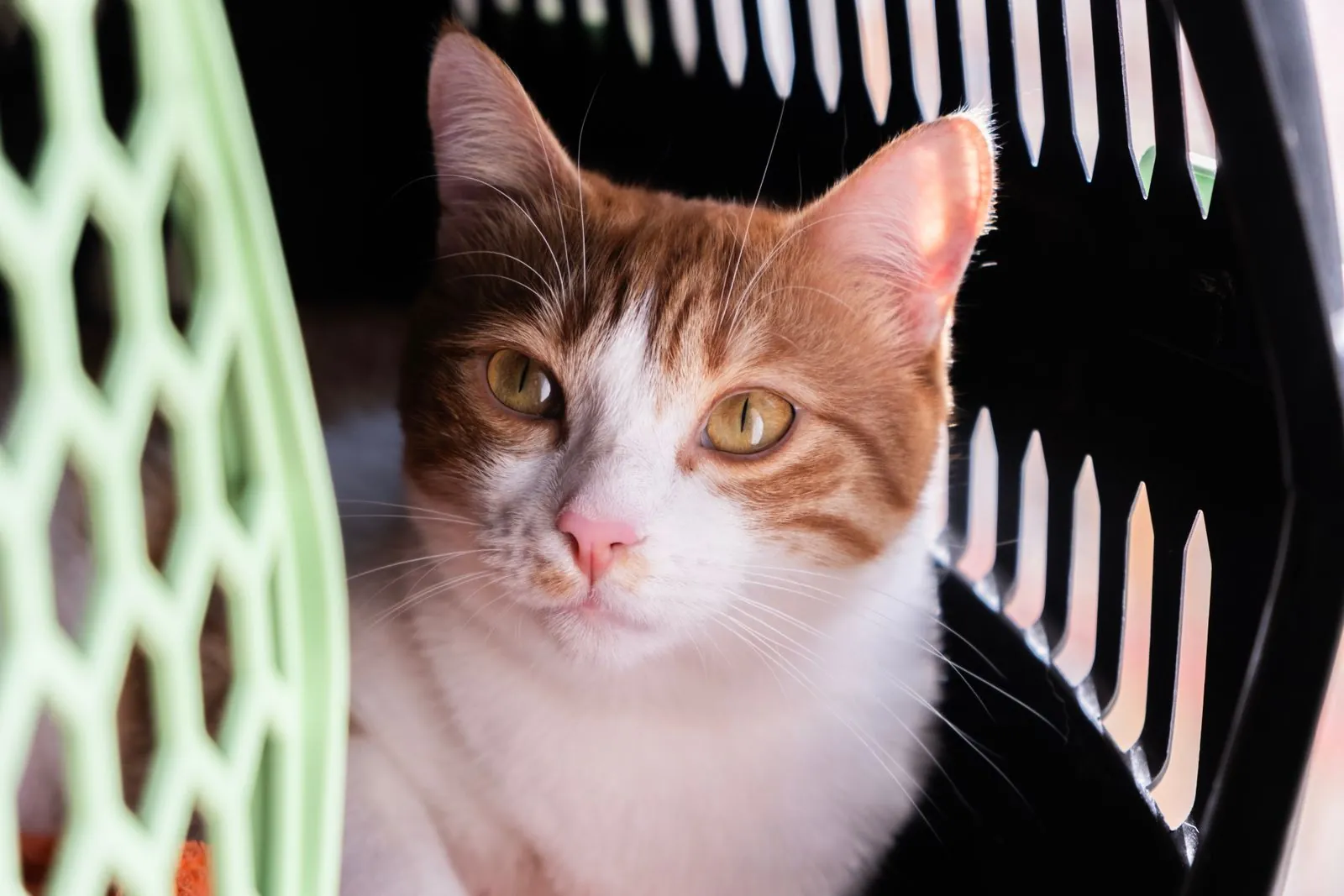
Some links on this page are Amazon affiliate links. If you buy through them CatBasket may earn a small commission, and the price you pay does not change. How we research this: we have not lab-tested these carriers. The picks are based on manufacturer dimensions and specifications, UK retailer listings, customer reviews in aggregate and International Cat Care's advice on vet visits and travel.
Best Cat Carriers UK, Including XL Carriers for Large Cats
The best cat carrier for most people is a hard plastic one whose top opens, such as the Catit Cabrio at about £43 at UK retailers. For a large cat, buy one sold for large cats, such as the Ferplast Atlas 30 Open at about £50 to £64.
Prices checked 28 September 2026 at Pets at Home, Zooplus and Ferplast UK.
- Vet visits: a top-opening hard carrier, £25 to £64. Jump to the picks.
- Large cats: a carrier of about 60cm sold for large cats or small dogs, about £49 to £64.
- Tight budget: a basic hard carrier, £11 to £21.
- Short trips with a calm cat: a soft carrier with a rigid base, £16 to £36.
Is a hard or soft cat carrier better?
A hard plastic carrier is better for most cats, because it wipes clean, holds its shape and usually opens at the top.
International Cat Care recommends a carrier that is "easy to clean (preferably plastic or plastic-coated)" and one that opens at the top, "as your cat can be gently lifted in or out". Cats are often sick or wet themselves on the way to the vet, and fabric keeps the smell. Soft carriers are lighter and fold flat, so they suit short trips with a relaxed cat. Wicker looks good but is hard to disinfect; the cat basket guide covers wicker carriers if you want one anyway.
| Type | Price range (Sept 2026) | Good for | Drawback |
|---|---|---|---|
| Hard, top-opening | £25 to £64 | Vet visits, nervous cats | Bulky to store |
| Hard, front door only | £11 to £24 | Occasional trips on a budget | Harder to get a scared cat out |
| Soft with rigid base | £16 to £36 | Calm cats, short trips | Harder to clean; less protection |
| Backpack | From about £22 | Walking or public transport | Some cats hate the height and movement |
Ranges are from Pets at Home, Zooplus and Ferplast UK listings on 28 September 2026.
1. Catit Cabrio: best carrier for vet visits
The top half swings open, so the vet can examine the cat in the base instead of pulling it out through a door. It also has a front door and a one-handed lock. At 51cm long it fits an average adult cat; a big Maine Coon needs the larger option below.
2. Ferplast Atlas 30 Open: best carrier for a large cat
Ferplast says the Atlas 30 Open "was particularly designed for small dogs and large cats". The top grille opens, which helps at the vet, and the door clips close from outside. The smaller Atlas 10 and 20 Open, about £25 to £50, suit average cats.
3. Basic hard carrier: best on a budget
A plain plastic box with a grille door, such as the Catit Voyageur (48 x 32 x 28cm, about £18 at Zooplus) or the Ferplast Jet (£11 to £15 at Pets at Home). It does the job for a yearly booster. Look for metal fixings on the door, and pay more for a top door if your cat fights the carrier.
4. Soft carrier with a rigid base: best for calm cats
Fine for a relaxed cat on a short car trip or a train. Choose one with a firm floor so the cat is not swinging in a sling, zips that can be clipped shut, and a shoulder strap. Skip it for a cat that claws at mesh or panics in transit.
What size cat carrier do I need?
Buy a carrier the cat can stand up and turn round in: about 48 to 51cm long for an average adult cat, and about 60cm for a large breed.
| Cat | Carrier length | Examples |
|---|---|---|
| Kitten or small cat | About 45 to 48cm | Catit Voyageur (48cm) |
| Average adult cat (around 4 to 5kg) | About 48 to 51cm | Catit Cabrio (51cm) |
| Large breed (Maine Coon, Norwegian Forest, big Ragdoll) | About 60cm | Ferplast Atlas 30 Open, 60cm hard boxes |
Retailers list outside measurements, so the space inside is a few centimetres smaller. Weigh and measure your cat first; "cat size" on a label means little.
What is the best cat carrier for a large cat?
A hard carrier made for large cats, with a top opening, such as the Ferplast Atlas 30 Open, is the best choice for a large cat.
Zooplus also sells a 60 x 40 x 38cm hard box for about £49. Check the maximum weight the handle is rated for, and carry a big cat with a hand under the carrier as well as on the handle. The Maine Coon and Ragdoll guides cover adult sizes.
Do cats prefer small or large carriers?
Most cats feel safer in a carrier that fits them snugly than in a big one they slide around in.
International Cat Care makes the point that a bigger carrier does not make a cat feel more secure, because cats like to sit in a small space. A carrier should fit the cat without lots of spare room. Buy for the cat's size, not a size up for comfort.
Should you cover a cat carrier in the car?
Yes, covering the carrier with a towel or cloth calms most cats, and the carrier should be strapped in or wedged in a footwell.
International Cat Care advises covering the carrier "with a cloth or towel while travelling to keep your cat calm", and securing it "in a footwell or on a seat (with a seatbelt) so it can't move". Leave a gap for air. Rule 57 of the Highway Code asks drivers to keep animals suitably restrained so they cannot distract you or be hurt if you brake hard.
How long can a cat be in a carrier?
There is no fixed limit, but for long journeys International Cat Care advises withholding food for four to five hours beforehand, offering water, and lining the carrier with absorbent pads.
A vet trip of an hour or so needs nothing special. On a longer drive, stop to offer water, and do not open the carrier door outside the car, because a frightened cat can bolt. Most cats will not use a litter tray on the move, which is why the pads matter.
How do you get a cat used to its carrier?
Leave the carrier out all the time with a blanket inside, so it becomes a place the cat sleeps rather than something that only appears on vet day.
International Cat Care suggests making the carrier "part of the furniture". Feed treats near it, then inside it with the door open. A synthetic pheromone spray such as Feliway, sprayed at least 15 minutes before the cat goes in, can help. This matters most for rescue cats, which may already link a carrier with a bad day.