Some links on this page are Amazon affiliate links. If you buy through them CatBasket may earn a small commission, and the price you pay does not change.
Norwegian Forest Cat: Breed Guide for UK Owners
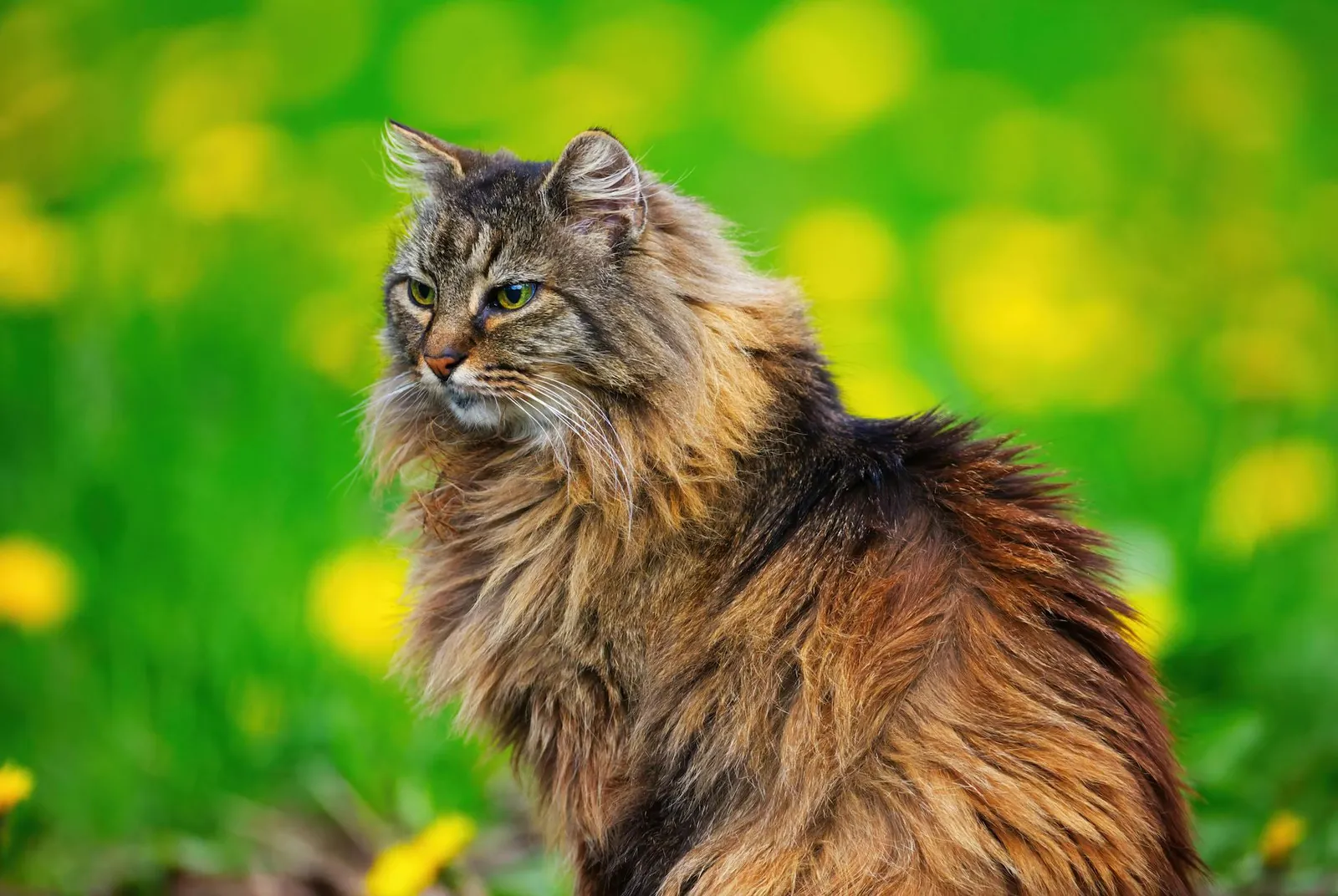
The Norwegian Forest Cat is a large, semi-longhaired natural breed from Norway: friendly but independent, a strong climber, and happy to entertain itself. Its double coat sheds heavily in spring but rarely mats, and breeders should DNA test for the inherited disease GSD IV.
| Norwegian Forest Cat at a glance | |
|---|---|
| Weight | Females about 4 to 5.5kg, males 5.5 to 7kg or more |
| Lifespan | 14 to 16 years |
| Coat | Woolly undercoat under a long, water-repellent top coat; full ruff in winter |
| Temperament | Gentle, playful, not demanding; can be reserved with strangers |
| Fully grown | Around 4 to 5 years |
| Health check to ask for | DNA test for glycogen storage disease type IV (GSD IV) |
Figures from the GCCF Norwegian Forest Cat breed profile.
Norwegians call it the skogkatt, and the breed developed over centuries as a farm cat in a harsh climate. It was nearly lost to crossbreeding with local shorthairs before Norwegian breeders began a breeding programme; FIFe registered it in 1976, King Olaf V made it Norway's official cat, and the GCCF gave it championship status in 1997. It is often mistaken for a Maine Coon, but it has a triangular head with a straight profile, where the Maine Coon's is squarer.
Are Norwegian Forest cats friendly?
Yes, Norwegian Forest Cats are friendly and gentle with their own people, but they are independent rather than clingy and can be reserved with strangers.
The GCCF describes them as enjoying family life without demanding attention. Most like company on the sofa more than on a lap. They are tolerant of respectful children, other cats and cat-friendly dogs, and their voice is quiet except at mealtimes. Because they amuse themselves, they cope with a working household better than more dependent breeds, as long as they have toys and something big to climb.
How big do Norwegian Forest cats get?
Male Norwegian Forest Cats usually weigh 5.5 to 7kg or more and females 4 to 5.5kg, and they are not fully grown until about four or five years old.
A one-year-old looks leggy; the bulk and the full winter ruff come later. They climb trees and come down head first, so indoors they need a tall, heavy cat tree rated for a large cat. The cat tree guide lists sturdy options.
Do Norwegian Forest cats shed a lot?
Yes, Norwegian Forest Cats shed a lot in spring, when they drop their thick winter undercoat, and a moderate amount the rest of the year.
The coat is fairly low-maintenance for its length because it does not knot easily. Comb it weekly and every day or two during the spring moult, when dead undercoat needs removing before it tangles. A stainless steel comb and a slicker brush are all you need; baths are rarely necessary. More tools are compared in the cat brush guide.
Are Norwegian Forest cats hypoallergenic?
No, Norwegian Forest Cats are not hypoallergenic, and their heavy seasonal shedding spreads allergen through the house.
Every cat produces Fel d 1, the protein in saliva and skin that causes most cat allergies. If someone at home is allergic, spend time with adult cats before you commit.
Can Norwegian Forest cats go outside?
Yes, Norwegian Forest Cats can go outside and many enjoy it, though they also settle indoors if they have climbing space and play.
The GCCF says they "love the outdoors, but equally enjoy a quiet home life". The coat copes with British weather. The risks are the usual ones for a valuable, friendly cat: roads and theft. The GCCF also notes they like fishing, so cover the garden pond. A secure garden or catio gives the outdoor time without the roaming. See indoor vs outdoor cats.
Do Norwegian Forest cats have health issues?
The breed is generally robust, and its one well-known inherited disease, glycogen storage disease type IV (GSD IV), has a DNA test.
GSD IV is recessive: a kitten is only affected if both parents carry the gene. Affected kittens are usually stillborn or die soon after birth, although some seem normal until four or five months old. Ask for DNA results on both parents. Some breeders also DNA test for PK deficiency, an inherited anaemia that a 2012 study found in several breeds including the Norwegian Forest, and heart-scan breeding cats for HCM. The GCCF also mentions anecdotal evidence that the breed may be prone to urinary problems, so keep your cat drinking well; wet food and a water fountain both help. Source: GCCF Norwegian Forest Cat profile.
How long do Norwegian Forest cats live?
Norwegian Forest Cats usually live 14 to 16 years, according to the GCCF.
They stay active into old age. Keep them at a healthy weight and book a yearly vet check, adding dental checks as they get older.
What a Norwegian Forest Cat costs
Registered Norwegian Forest kittens are rarely advertised, so expect to ask breeders for their price directly; the one litter at the top of Pets4Homes listings on 28 September 2026 was £1,000.
Most other listings that day were £100 to £350, and many were described as crosses. Treat a cheap "Norwegian Forest" kitten as a warning sign: it is unlikely to come with registration or GSD IV results.
Expect to contact breeders and join a waiting list. Ask for GCCF, TICA or FIFe registration, GSD IV results and a kitten of at least 13 weeks. "Norwegian Forest type" usually means a domestic longhair. Everyday costs are in how much a cat costs in the UK, and adult cats needing homes in adopting a rescue cat.
Prices checked September 2026.