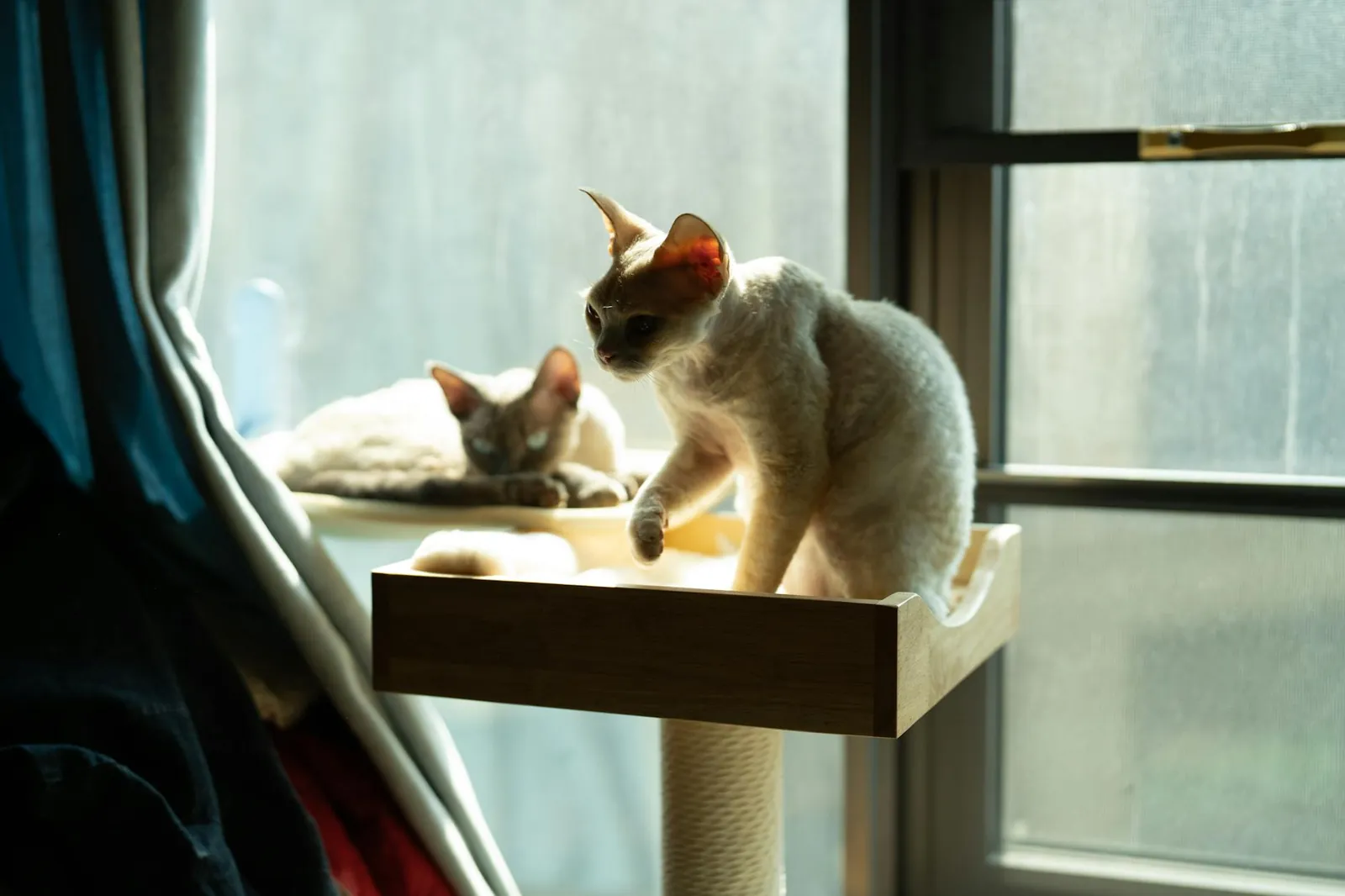
Devon Rex Cat: Breed Guide for UK Owners
The Devon Rex is a small, curly-coated British breed with huge ears, a pixie face and a very sociable, playful nature. It suits a busy household where someone is home, because Devons hate being left alone; the main inherited risk, a muscle disease, has a DNA test.
| Devon Rex at a glance | |
|---|---|
| Origin | Buckfastleigh, Devon, 1959 |
| Weight | About 2.7 to 4.1kg; males heavier |
| Lifespan | 12 to 16 years |
| Coat | Short, soft and wavy, with few guard hairs; any colour or pattern |
| Temperament | Active, clever, people-focused, good with children |
| Health checks to ask for | DNA test for Devon Rex myopathy; kneecaps checked |
| Kitten price | Mostly £1,000 to £1,600 (September 2026) |
Weights, lifespan and health notes from the GCCF Devon Rex breed profile.
The first Devon Rex, a curly black smoke kitten called Kirlee, was born in Buckfastleigh in 1959 to a non-pedigree mother. Test matings with the Cornish Rex, which had appeared in Cornwall nine years earlier, produced only straight-coated kittens, which proved the Devon curl came from a different gene. The GCCF recognised the breed in 1967.
Are Devon Rex cats affectionate?
Yes, Devon Rex cats are among the most affectionate breeds: they sit on shoulders, sleep under the covers and want to be part of whatever you are doing.
They are also clever and busy. Devons jump well, perch on top of doors and learn how cupboards open, so put child locks on anything you would rather they left alone. The GCCF describes them as great with children and other pets. They are not especially loud, but they chirp to get your attention.
They feel warm to the touch because the thin coat insulates less, not because they run hotter, and they seek out radiators, sunny windows and heated beds. A heated or radiator bed gets plenty of use in a UK winter.
Can a Devon Rex be left alone?
A Devon Rex can manage a few hours alone, but not long working days, because it thrives on company and can become destructive when bored.
If everyone is out from morning to evening, get two cats. A pair of Devons, or a Devon with another sociable cat, keep each other busy. The GCCF profile says they do best in a home with other cats.
Can Devon Rex cats go outside?
Devon Rex cats can go outside in good weather, but many owners keep them indoors or in a secure garden, because the thin coat gives little protection from cold and wet.
A catio or a fenced garden lets a Devon sunbathe without roaming. Indoors, give it height: a tall cat tree, shelves and window perches. The trade-offs are set out in indoor vs outdoor cats.
Do Devon Rex cats need baths?
Most Devon Rex cats need an occasional bath or a regular wipe-down, because their skin oils build up on a coat too thin to absorb them.
A weekly wipe with a damp soft cloth, paying attention to the belly and paws, is usually enough; bathe with a cat shampoo if the coat looks greasy. Brush gently with your hand or a soft rubber mitt, since the fine hairs break easily. Check the large ears every week and clean away wax with a vet-approved ear cleaner. If the skin turns red, smelly or crusty, see the vet.
Devons do shed, but the fine coat makes it less noticeable. They are not hypoallergenic: the GCCF says they produce allergens like every other cat, and some allergic people cope with them while others do not. Spend time with adult Devons before you buy if anyone in the house has an allergy.
Do Devon Rex cats have health problems?
Devon Rex cats are generally healthy, but the breed has an inherited muscle disease, Devon Rex myopathy, and kneecap dislocation (patellar luxation) is more common than in most breeds.
Myopathy, also called spasticity, causes muscle weakness, a drooping head and trouble swallowing. There is a reliable DNA test, so ask to see results for both parents. Patellar luxation ranges from mild, needing no treatment, to cases that need surgery; ask the breeder whether it has appeared in their lines and have your vet check the kitten's knees. HCM, the heart disease common across cats, is also reported in the breed, so ask whether the parents have been heart-scanned. Source: GCCF Devon Rex profile.
How long do Devon Rex cats live?
Devon Rex cats typically live 12 to 16 years, according to the GCCF.
They stay playful for most of that time, so expect a cat that still races round the house at ten years old.
What a Devon Rex costs
Devon Rex kittens on Pets4Homes were mostly £1,000 to £1,600 when we checked on 28 September 2026, with a few at £1,800 to £2,200.
Ask for GCCF, TICA or FIFe registration, the myopathy DNA results and a kitten of at least 13 weeks. Adult Devons sometimes come up for rehoming at lower prices. Running costs are in how much a cat costs in the UK, and rescue routes in adopting a rescue cat.
Prices checked September 2026.