How to Cat Proof Your House: A Room-by-Room UK Checklist
Cat proof your house by locking away medicines and cleaning products, getting rid of lilies, tidying cables and string, stopping windows from tilting open, and checking the washing machine and tumble dryer before every load. Do the medicines and the lilies first: both can kill a cat.
Last updated 28 September 2026. Safety advice checked 28 September 2026 against Cats Protection and PDSA guidance (sources at the end); Animal PoisonLine call prices checked the same day. This page is general safety advice, not a diagnosis. If you think your cat has eaten or licked something poisonous, ring your vet straight away.
Some links on this page are Amazon affiliate links. If you buy through them CatBasket may earn a small commission, and the price you pay does not change. The links go to Amazon search results for the type of product described, not to one product we are vouching for.
In short
- Human painkillers are the big one. Paracetamol and ibuprofen are poisonous to cats, and so are some gels and creams people leave on bedside tables.
- No lilies in the house or garden, including in bouquets. Pollen licked off the fur is enough to damage a cat's kidneys.
- Windows that tilt open at the top can trap a cat in the gap. Fit a restrictor or a mesh guard, or don't use the tilt setting.
- Check inside the washing machine, tumble dryer and under a recliner before you use them.
- Cables, hair ties, string and ribbon get chewed or swallowed. Clip cables away and put the small stuff in drawers.
How do I cat proof my house?
Go room by room before the cat arrives and deal with poisons first, then things a cat can get trapped in, then things it can chew or swallow. That order matches how badly each one goes wrong. A chewed live cable can burn or shock a cat; a swallowed hair tie can need surgery; a licked lily or a dropped painkiller can be fatal.
Get down to cat height for a minute in each room. You'll spot the gap behind the washing machine, the cable dangling off the desk and the blister pack on the bedside table much faster from down there. A kitten will squeeze into any gap its head fits through, so pay extra attention to spaces behind and under kitchen units if you're bringing one home.
Medicines, cleaning products and food
Put every medicine in a cupboard or drawer with a door, not on a shelf. Cats Protection says paracetamol and ibuprofen should never be given to cats, and lists anti-inflammatory gels, HRT gels, psoriasis creams and hair-loss treatments containing minoxidil as poisonous too. Gels and creams are the easy ones to forget: a cat that rubs against freshly treated skin, then grooms, has swallowed some.
Cleaning products go behind a closed door as well. Bleach, drain unblocker and white spirit are on the Cats Protection poison list, and a cat that walks across a wet floor or a just-cleaned bath will lick its paws afterwards. Rinse with plain water after cleaning anywhere the cat walks. Cupboard catches sold for toddlers (child safety cupboard locks) work on kitchen units and cost very little.
In the kitchen, the foods to keep off the worktop are onions, garlic and the rest of the onion family (cooked or raw), grapes, raisins, sultanas and currants, chocolate, and alcohol. A pedal bin with a lid stops the cat going through leftovers and cooked bones.
How do I stop my cat jumping on the kitchen worktops?
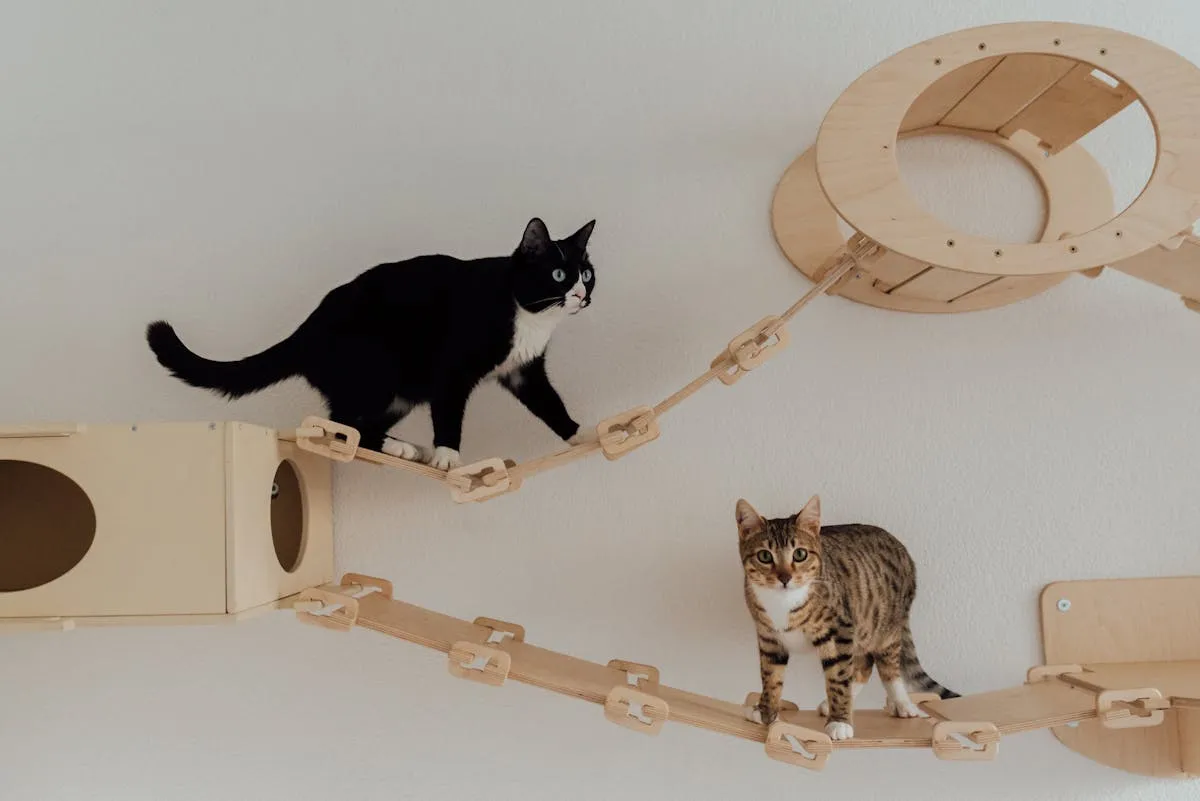
Give it somewhere better to be. The RSPCA points out that cats often feel safest up high, so a cat on the worktop usually wants height or food, and a cat tree or shelf near the kitchen answers the first. Keep the worktops bare of food so the second stops paying off, and feed the cat somewhere else at set times.
Shouting or spraying water tends to teach a cat to jump up when you're out of the room, which is worse. If the hob is the worry, keep the cat out of the kitchen while you cook and until the rings have cooled, and never leave a gas flame on with the cat in the room. See our cat tree guide if you need a tall perch that isn't the worktop.
How do I cat proof cables?
Clip cables to the back of furniture or run them through a cover so there's nothing loose to bite. Cats Protection recommends cable tidies and clips for exactly this. Kittens are the chewers; most adult cats leave cables alone once there's nothing dangling.
Spiral wraps and split tubing (cable protectors) cover the runs you can't hide, and a lidded cable box swallows a power strip and its tangle. Unplug phone chargers when nothing is on charge; a live charger lead is the most common thing left trailing across a floor. Blind cords with loops should be tied up out of reach, since a cat playing with a loop can get caught in it.
String, ribbon, hair ties and elastic bands belong in the same drawer. Cats Protection warns that string can get stuck in the stomach if swallowed, and says tinsel and ribbon can cause blockages that are sometimes fatal. Play with string toys together and put them away after.
Lilies and other dangerous plants
Don't have lilies anywhere a cat can reach, and that means anywhere in the house or garden. PDSA says every part of the plant is dangerous, pollen included, and that a cat which licks or eats any of it is likely to get kidney damage that can lead to kidney failure and death if it isn't treated. The usual route is pollen dropping onto the fur and being licked off later, so a vase of lilies on a high shelf is still a risk. Check bouquets before they come through the door.
Cats Protection also lists daffodils, tulips, peonies, ficus, cheese plants, aloe vera, cycads, mistletoe and poinsettia as dangerous. Safer houseplants on its list include spider plants, parlour palms, prayer plants, peperomia, orchids and Christmas cactus. The full Cats Protection plant list is in the sources below; check any new plant against it before it goes on a windowsill.
How do I cat proof my windows?
Stop any window opening wider than a cat can fit through, and pay most attention to windows that tilt inwards at the top. Cats Protection warns that tilted windows can trap cats, which then hurt themselves trying to get free. On a tilt-and-turn window, either fit a mesh guard made for that window type (tilt-and-turn window guards) or use the turn setting only with the cat out of the room.
For ordinary opening windows, a restrictor that stops the sash at a narrow gap (window restrictors) lets you ventilate the room without leaving an exit. If you want the window fully open, fit a mesh screen made for cats, fixed firmly enough that a cat pushing or clawing at it can't get through; a light insect screen won't hold. Upstairs windows matter more than ground-floor ones, obviously, but a ground-floor window left open is also how an indoor cat or a cat still settling in gets out.
How do I cat proof a balcony?
Net it. Cat netting fixed from the balcony floor or railing up to the ceiling or wall above (balcony cat netting) closes the gaps a cat could squeeze through or jump from, while you still use the space. Railings with gaps a cat's head fits through need mesh along the bottom as well.
Until the netting is up, keep the balcony door shut, even when you are out there yourself. A cat watching a bird from a railing can misjudge a jump. If you rent, check your tenancy before drilling or fixing anything to the building; most netting kits clamp or tie on without screws.
Washing machines, tumble dryers and recliners
Keep appliance doors closed and look inside before you switch anything on. Cats Protection gives that advice for washing machines and tumble dryers, and adds reclining chairs, which can trap a cat underneath when they're closed. A warm drum full of clean towels is exactly the kind of hiding place a cat picks. Dishwashers and the gap behind a fridge are worth a glance too.
The toilet lid is worth keeping down as well: a small kitten can struggle to climb out of a full bowl, and an adult cat drinking from it will get a mouthful of whatever cleaner is in there. Open fires need a guard, and candles are safer on a surface the cat can't reach or swapped for battery ones.
Garden sheds, slug pellets and antifreeze
Lock chemicals away and choose pet-safer versions where they exist. Cats Protection names slug bait containing metaldehyde or methiocarb, antifreeze containing ethylene glycol, rodent bait, weedkillers and insect killers as poisonous to cats. Keep the shed or garage shut, wipe up antifreeze spills straight away, and use slug controls that don't rely on metaldehyde. Our indoor vs outdoor guide covers fencing a garden so a cat stays in it.
What to do if you think your cat has been poisoned
Ring your vet straight away, even if the cat seems fine. Cats Protection advises taking the cat away from the poison, taking a sample or the packaging to the vet, and not trying to make the cat sick or treat it yourself. With lilies, PDSA notes that signs usually show within hours but kidney failure can take a few days to develop, so waiting to see what happens loses time you need.
If you can't reach a vet, the Animal PoisonLine (01202 509000) is open 24 hours. It charges £35 per call from 8am to 8pm on weekdays and £45 at all other times, including bank holidays (checked 28 September 2026). It gives advice, not treatment, so you will still need a vet.
Cat proofing checklist, room by room
Work through this before the cat comes home, and again when a new kitten starts climbing.
| Room | Check |
|---|---|
| Everywhere | No lilies; cables clipped or covered; hair ties, elastic bands, string and ribbon in drawers; window restrictors fitted; looped blind cords tied up |
| Kitchen | Cleaning products behind a closed door; bin with a lid; no onions, grapes, raisins or chocolate left out; cat kept out until the hob has cooled |
| Bathroom | Medicines, gels and creams in a closed cabinet; toilet lid down; bath and shower rinsed after cleaning |
| Bedroom | Painkillers and prescriptions off the bedside table; earrings and hair clips in a box |
| Utility | Washing machine and dryer doors shut; drum checked before every cycle |
| Living room | Recliner checked before closing; fire guard in place; candles out of reach |
| Garden and shed | Slug bait, antifreeze, weedkiller and rodent bait locked away; no lilies in the borders |
Sources
- Cats Protection: poisoning (medicines, cleaning and garden chemicals, foods, what to do)
- Cats Protection: keeping your cat safe at home (tilted windows, appliances, cables, string, recliners)
- Cats Protection: dangerous plants (lilies, other dangerous and safe plants)
- Cats Protection: cats at Christmas (tinsel and ribbon)
- PDSA: lily poisoning in cats
- RSPCA: your cat's environment
- Animal PoisonLine (hours and call charges)