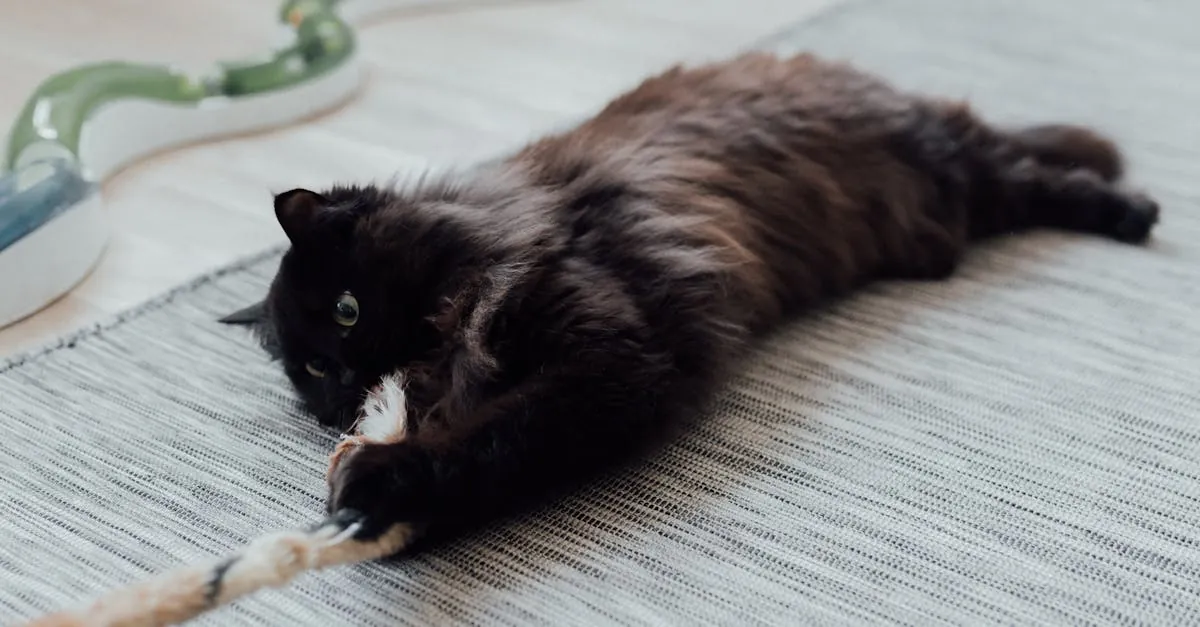
Some links on this page are Amazon affiliate links. If you buy through them CatBasket may earn a small commission, and the price you pay does not change. Prices move often; the figures here were checked in September 2026.
Best Cat Toys UK 2026: The Ones Cats Actually Play With
The best cat toy is a feather wand that you move for the cat, about £2 to £9. For times you are out, add a kicker toy and a ball track, and rotate what is left out so the cat does not get bored of it.
Prices checked 28 September 2026 at UK pet retailers.
How we research this: we have not lab-tested these toys. The picks come from manufacturer specifications, UK retailer listings and customer reviews in aggregate, checked against play guidance from Cats Protection and International Cat Care.
- Playing together: a feather wand, £2 to £9.
- Playing alone: a kicker toy (£3.50 to £5) and a ball track (£10 to £14).
- Cats that ignore catnip: silver vine sticks, about £2.50 to £3.50.
- Kittens: a crinkle tunnel and small balls, under £8 for both.
What's the best cat toy?
A wand toy with feathers or fabric on a string, because the cat can stalk, chase, pounce on and catch it, and you control the movement.
International Cat Care notes that toys which move randomly hold a cat's interest, while toys left lying still soon become boring. Toys about the size of prey and made of prey-like materials, such as feathers, do best. A wand gives you both. It also keeps your hands out of the game, which Cats Protection recommends at any age: a cat that learns to attack fingers as a kitten keeps doing it as an adult.
| Toy | Price (Sept 2026) | Good for | Watch out for |
|---|---|---|---|
| Feather wand | £2 to £9 | Daily play with you | Put it away afterwards; string is a swallowing risk |
| Kicker toy | £3.50 to £5 | Solo play, cats that grab and bunny-kick | Check seams for splitting |
| Ball track | £10 to £14 | Solo play for indoor cats | Some cats lose interest; rotate it |
| Silver vine or catnip toys | £2 to £5 | Cats that need coaxing to play | Effect wears off within minutes |
| Crinkle tunnel | £7 to £8 | Kittens and cats that like to hide and ambush | Folds flat for storage |
| Laser pointer | £4.50 to £10 | Short bursts of running | Always finish on a toy the cat can catch |
Prices from Zooplus and other UK pet retailers, 28 September 2026.
The picks
1. Feather wand: best toy overall
Flick the feathers along the floor and behind furniture, the way a bird or mouse would move, then let the cat catch it now and then. A telescopic rod lets you play from the sofa. Replacement feather ends are cheap, so a wand lasts as long as the rod does. Store it in a drawer between sessions.
2. KONG Kickeroo: best kicker toy
A long toy the cat can hug with its front legs and kick with its back legs, which is how cats wrestle prey. It is filled with catnip and is too big to swallow. The kitten size suits small cats.
3. Catit Senses ball track: best for solo play
A ball trapped in a curved track that the cat can bat round but never lose under the sofa. It suits indoor cats left on their own during the day. Zooplus lists two 110cm versions, the Play Circuit and the Speed Circuit.
4. Silver vine sticks: for cats that ignore catnip
In a 2017 study published in BMC Veterinary Research, 68% of domestic cats reacted to catnip and 79% to silver vine. Of the cats that ignored catnip, almost three in four reacted to silver vine. Cats chew and rub on the sticks, so replace them once they splinter.
5. Crinkle tunnel: best for kittens
Kittens run through it, hide in it and ambush each other from it. Drag a wand past the end and older cats join in too. It folds flat when you want the floor back.
6. Trixie Catch the Light: a laser, used carefully
A laser gets a lazy cat running, but the cat can never catch the dot. Use it for a minute or two, then land the dot on a toy the cat can pounce on and bite. Never shine it at eyes, the cat's or anyone else's.
What are the best interactive cat toys?
Wand toys are the best interactive toys, because you provide the unpredictable movement that makes a cat hunt.
International Cat Care says interactive wand play also strengthens the bond between cat and owner. Battery toys that move on their own are sold as interactive too. They help when you are out, but most repeat the same movement, and cats tend to lose interest in them faster than in a wand in human hands. Treat them as an extra.
What toys do cats like to play with by themselves?
Kicker toys, balls in a track, catnip or silver vine toys, and puzzle feeders that release food as the cat works at them.
Cats Protection advises against leaving a cat alone with toys it could shred and swallow or get tangled in, so wands, anything with string, and toys with glued-on eyes or bells go away when you leave. Rotate the solo toys: put three or four out and swap them each week. International Cat Care recommends keeping toys in a drawer and rotating them so they stay interesting. Our guide to indoor and outdoor cats covers more ways to keep an indoor cat busy.
What are the best cat toys for kittens?
Small, light toys a kitten can bat and carry, such as soft balls, crinkle balls and small mice, plus a tunnel and a wand for play with you.
Kittens play in short bursts many times a day. Choose toys too big to swallow and without loose bells or beads, and check them often for damage. Play with a wand rather than your hands, so the kitten learns to bite toys and not people. The new kitten checklist lists toys alongside the rest of the starter kit.
Are laser pointers bad for cats?
Not if you use them briefly and end each game with a toy the cat can catch, and never shine them in the cat's eyes.
The problem with a laser is that the hunt never finishes. Cats Protection advises letting cats catch and "kill" their toys from time to time so they do not get frustrated. Used as the start of a game that finishes on a real toy, a laser is fine.
How long should you play with your cat a day?
Several short sessions of one to two minutes spread through the day work better than one long game.
Cats Protection says very short games are fine: older cats may want to play three or four times a day, and young cats ten times or more. A cat that races round the house at night or pounces on your feet in bed usually needs more play earlier in the evening. Try a wand game just before its evening meal.