Some links on this page are Amazon affiliate links. If you buy through them CatBasket may earn a small commission, and the price you pay does not change. Prices move often; the figures here were checked in September 2026.
Best Cat Scratching Posts and Scratchers UK 2026
The best scratching post for most cats is a heavy sisal-rope post at least 80cm tall, about £15 to £30 at UK retailers, with a cardboard pad on the floor for cats that scratch carpets.
Prices checked 28 September 2026 at UK pet retailers.
How we research this: we have not lab-tested these scratchers. The picks come from manufacturer specifications, UK retailer listings and customer reviews in aggregate, checked against scratching guidance from International Cat Care and Cats Protection.
- Most cats: a sisal post of 80cm or more on a wide, heavy base, £15 to £30.
- Maine Coons, Ragdolls and other big cats: a post of 100cm or more weighing over 5kg, £27 to £65.
- Cats that scratch the carpet: a corrugated cardboard pad or wave, £3 to £15.
- Small flats: a sisal board screwed to the wall, £5 to £10.
Do cats need scratching posts?
Yes: every indoor cat needs something to scratch, and a post is the easiest way to keep that off the sofa.
Scratching sheds the old outer layers of the claws and leaves scent from glands between the paw pads, so it is part of how a cat marks its home. Cats also scratch and stretch after they wake up. Cats Protection advises that every cat should have its own post, placed away from the others to avoid squabbles.
Declawing is not an alternative. It is illegal across the UK under animal welfare law unless a vet does it for a medical reason.
How tall should a cat scratching post be?
Tall enough that your cat can scratch at full stretch without reaching the top, which for most adult cats means 80cm or more.
International Cat Care says a post should be as tall as your cat standing on its hind legs, fully stretched. Many cheap posts are 40 to 60cm, which is kitten height, and that is the most common reason an adult cat ignores one. For large breeds look at 100cm or more.
A tall post also needs to be stable. A post that rocks when the cat pulls on it gets abandoned, so look for a wide base and a listed weight. As a guide, the 80cm Olga post at Zooplus sits on a 39cm square base, and a 107cm post for large cats needs a base around 58 by 40cm and weighs about 6kg.
What are cat scratching posts made of?
Most are sisal rope wound round a cardboard or wooden core, with corrugated cardboard, sisal fabric, carpet and wood as the other common surfaces.
| Surface | Best as | What to know |
|---|---|---|
| Sisal rope | Vertical posts | Hard-wearing, and the claws catch on the weave as the cat pulls down |
| Sisal fabric | Boards and wall panels | Cheaper than rope, but wears through faster |
| Corrugated cardboard | Floor pads and waves | Easier to scratch, so good for kittens and older cats; sheds bits and needs replacing |
| Carpet | Budget posts and platforms | Cats use it, but a cat that already scratches your carpet may not see the difference |
| Wood or bark | Cats that go for furniture legs and door frames | Worth trying if a cat ignores sisal |
Cats have their own preferences, and some like to scratch horizontally. International Cat Care suggests offering both a vertical post and a flat surface until you know which yours uses.
The picks
1. Tall sisal post, 80cm or more: best for most cats
A plain sisal post that reaches past your cat's stretch does more than a small cat tree with short posts. Check the listing for the height of the scratching section, not just the overall height, and for a base at least 35cm across. At Zooplus the Olga post (80cm, about £15) is a typical example.
2. Extra-tall heavy post: best for big cats
A 7kg Maine Coon will push over a post built for a 4kg moggy. Look for 100cm or more, a thick trunk and a heavy base. Zooplus sells a 107cm post weighing about 6kg for around £27, and a 120cm post on a 56cm base weighing about 11.5kg for around £63.
3. Corrugated cardboard scratcher: best for carpet scratchers
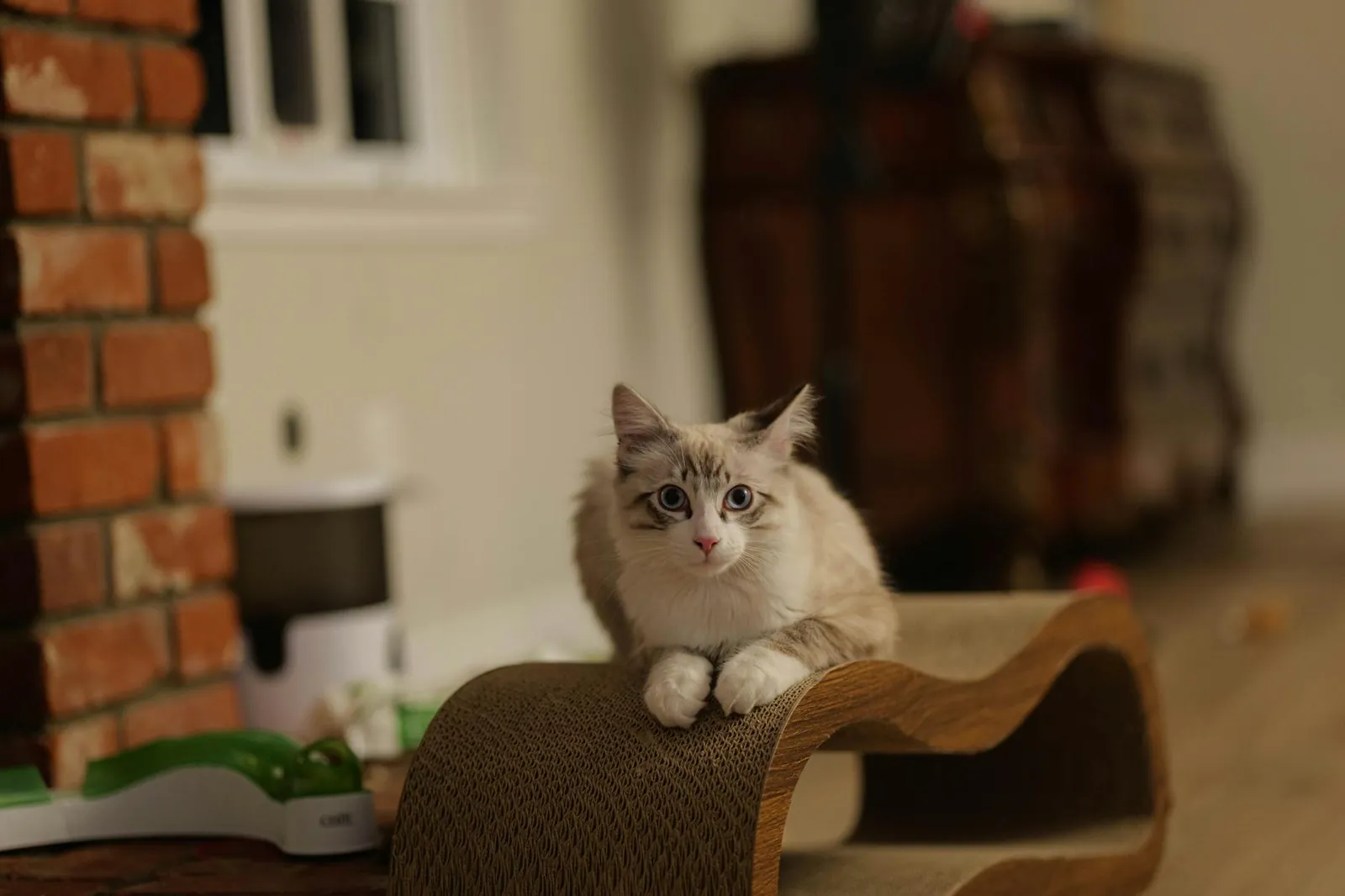
Cardboard is the cheapest way to find out whether your cat prefers to scratch lying flat. Wave-shaped loungers double as a bed. Cardboard wears out within months with regular use, so buy one with replaceable inserts or treat it as a consumable.
4. Wall-mounted sisal board: best for small spaces
A board screwed to the wall cannot wobble, and it takes no floor space. Fix it high enough that the top sits above your cat's stretch, or run it horizontally at floor level for a flat scratcher. Wall plugs and screws are usually not included. International Cat Care suggests wall panels as the alternative where there is no room for a post.
5. Sisal rope: to rewrap a worn post
When the rope on a sturdy post frays, rewrapping it costs far less than a new post. Untreated natural sisal is the thing to buy; avoid rope sold for gardening that may be oiled or treated.
How do I get my cat to use a scratching post?
Put it where the cat already scratches or next to where it sleeps, rub catnip on it, and make the wrong surface less appealing.
- Place the post right next to the damaged furniture at first. Once the cat is using it, you can move it a little at a time.
- Put one near the cat's bed, because cats scratch as they stretch after waking.
- Rub catnip on the post, or silver vine for cats that ignore catnip.
- Cats Protection suggests covering the furniture the cat has been scratching with thick, shiny plastic sheeting, which cats do not like to scratch.
- Drag a wand toy up the post during play so the cat's claws hit the sisal.
If a cat suddenly starts scratching in new places after a new pet, a baby or a house move, stress is a likely cause, and more posts will not fix it on their own. See reducing cat stress.
How many scratching posts does a cat need?
At least one per cat plus one extra, placed in different rooms.
That is International Cat Care's guidance for multi-cat homes, and it works for single cats too: one post by the bed, one in the living room where the cat spends its evenings, and a flat scratcher by the door or the spot it already uses.
When should you replace a cat scratching post?
Replace or rewrap it when the sisal is shredded down to the core, the post wobbles, or the cat has stopped using it.
A shabby post is not a problem in itself; cats often prefer one that is well scratched and smells of them. The trouble starts when bare cardboard shows through the rope, or the base loosens and the post rocks. Cardboard pads wear through fastest. Some brands sell replacement posts: Zooplus lists Natural Paradise spare posts at about £19 to £25.
Can you rewrap a cat scratching post?
Yes: strip off the old rope, then wind new sisal rope tightly round the post, gluing it as you go and fixing both ends.
- Unscrew the post from the base if you can, and pull off the old rope and any staples.
- Start at the bottom. Glue the end down; a small tack hammered in flush only holds it in place while the glue sets, so no metal should stick out.
- Wind the rope tight, pushing each turn down against the last so there are no gaps for claws to catch in.
- Run a line of glue every few turns, because the glue is what holds the rope on. Wood glue or a hot glue gun both work; let it set fully before the cat uses the post.
- Fix the top end the same way as the bottom, and tuck it under the platform if there is one.
Rewrapping is worth doing on a post with a solid base. If the base is loose or cracked, buy a new post.